Why Rats Move Indoors in Boynton Beach When the Weather Cools: How to Tell Which Ones You Have
RATS MOVING INDOORS IN THE COOLER MONTHS
Why Rats Move Indoors in Boynton Beach When the Weather Cools: How to Tell Which Ones You Have
You heard it on a quiet November night, a light scratching above the ceiling that was not there in September. Nothing about the house changed. The weather did. This guide explains why rats move indoors in Boynton Beach when the cooler months arrive, and how to tell which ones you have, because the fix for a rat in the attic is not the same as the fix for a rat under the floor.
Rat activity in South Florida peaks from late October through February, when cooler nights push rats toward warm shelter. The National Pest Management Association reported in its 2025 Bug Barometer that warmer fall conditions are pushing rodents indoors sooner than usual. Rats do not hibernate in Florida. They stay active all year, and the cooler months simply move their address from the yard to the house.
A single property can hold two kinds of rat at the same time, one living high and one living low, and treating only one leaves the other in place. This guide gives you a checklist for this week, a clear way to tell the two species apart, and the order of work that closes the house before the next cold night.
The Cool Season Starts in Late October, Not in January
Most people think of rat season as winter. In Boynton Beach the calendar runs differently. Nights start to cool in late October, and that first run of cool nights is the trigger. The attic holds the day’s warmth long after dark, the garage stays warmer than the yard, and the roofline gaps left by summer storms stand open.
AAAC Wildlife Removal on the Treasure Coast puts the peak of rat activity from late October through February. Central Florida pest companies report that January to March is when homeowners notice the increase most, because the colony that moved in during November has grown louder by then. The rats you hear in February usually arrived in November.
The warm fall makes it worse, not better. When October stays warm, rats keep breeding and feeding outdoors longer, so the colony is bigger when the cool nights finally arrive. A bigger colony meets an earlier move, and that is why a house that was quiet last year can be noisy this year.
Why Rats Move Indoors: Four Florida Reasons They Pick Your House This Month
Cooler nights are the trigger, but four local changes decide which houses the rats pick.
Fruit season ending. Mango, citrus, and avocado fed the rats all summer in Boynton Beach yards. As the fruit drops and rots or gets picked clean, the rats move to the next food source: the garbage can, the pet bowl, and the pantry. A yard full of fallen fruit in October becomes a house full of rats in November.
Storm season roof damage. Summer storms lift shingles, crack vent covers, and open small gaps along the roofline. A rat needs a gap the size of a quarter to get in, and a storm can leave a dozen such gaps on one roof. Our guide to how small a hole a rat can fit through shows why a gap you would walk past without noticing is a front door to a rat.
Holiday food waste. November opens the holiday season, and the bins fill with turkey bones, pie scraps, and party leftovers. Bins left out overnight, lids that do not close tight, and bags beside the bin are an open dinner invitation. Rats follow the smell to the bin, then follow the wall to the nearest gap.
A warm house in a cooling yard. The attic, the wall voids, and the garage hold heat through the night. For a rat, that warmth plus food plus a dry nest is everything it needs. The house does not have to be dirty or old, only warm, with food nearby and a gap to enter by.
Run This November Checklist This Week
Do these six checks in one evening, before the next cool night. Together they tell you whether rats are already in or only trying to get in.
Listen in the attic after dark. Stand quietly under the attic hatch for five minutes after sunset. Scratching, light running, and soft gnawing overhead point to roof rats settling in for the night.
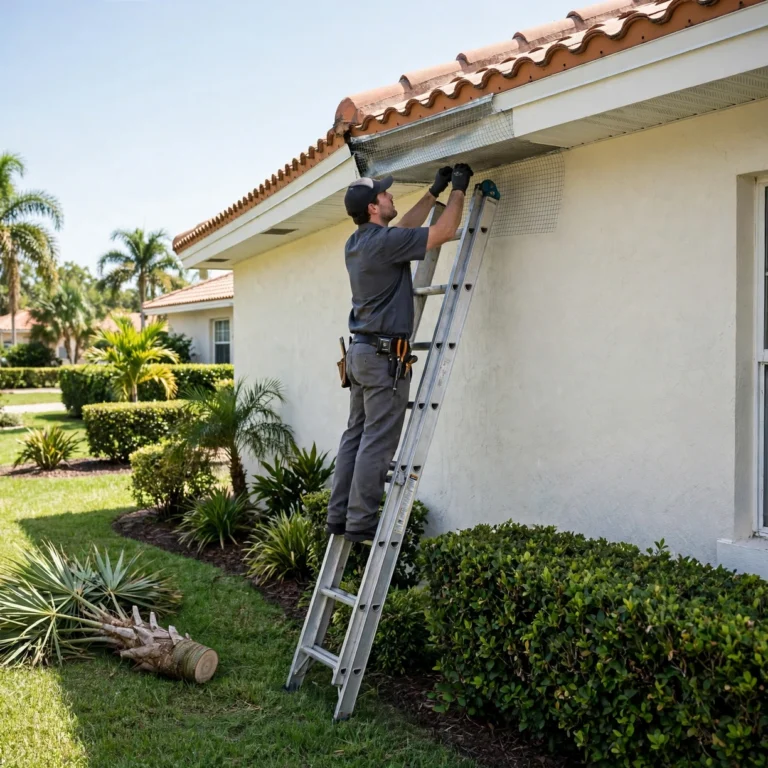
Walk the roofline in daylight. Look for lifted shingles, cracked vent covers, and gaps where the roof meets the wall. Check the soffits and the gable vents, and look for dark greasy rub marks where bodies brush the same spot.
Pick up every fallen fruit. Mango, citrus, and avocado on the ground are rat food. Pick up the fallen pieces the same day, and keep the bins lidded and off the ground where you can.
Check the garage door seal. Close the door and look for daylight along the bottom and sides. A gap under the door is a ground level entrance, and the garage holds stored food, pet food, and nesting material.
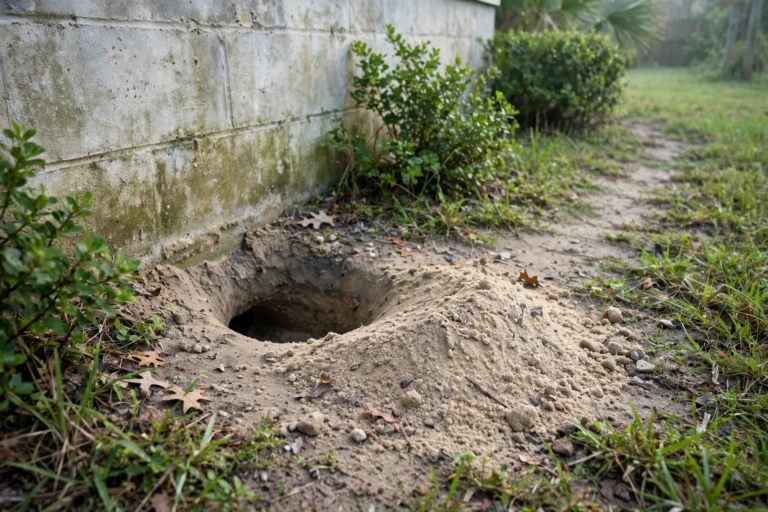
Look for fresh holes along the foundation. New holes with a fan of loose dirt mean digging, and digging near the house means Norway rats testing the ground floor. Our guide to rat holes in your yard shows how to tell an active burrow from an old one.
Check the droppings. Look in the attic corners, along the garage walls, and behind the water heater. Fresh droppings are dark and moist, old ones are dry and grey, and the shape tells you the species. Our guide to rat droppings shows how to read them without touching them.
One Property Can Hold Two Kinds of Rat at Once
Yes, and in Boynton Beach it is common. Roof rats and Norway rats can live on the same property at the same time, because they use different parts of it. They rarely meet, and neither pushes the other out. Finding one kind does not rule out the other, and treating only the one you found leaves the second colony in place.
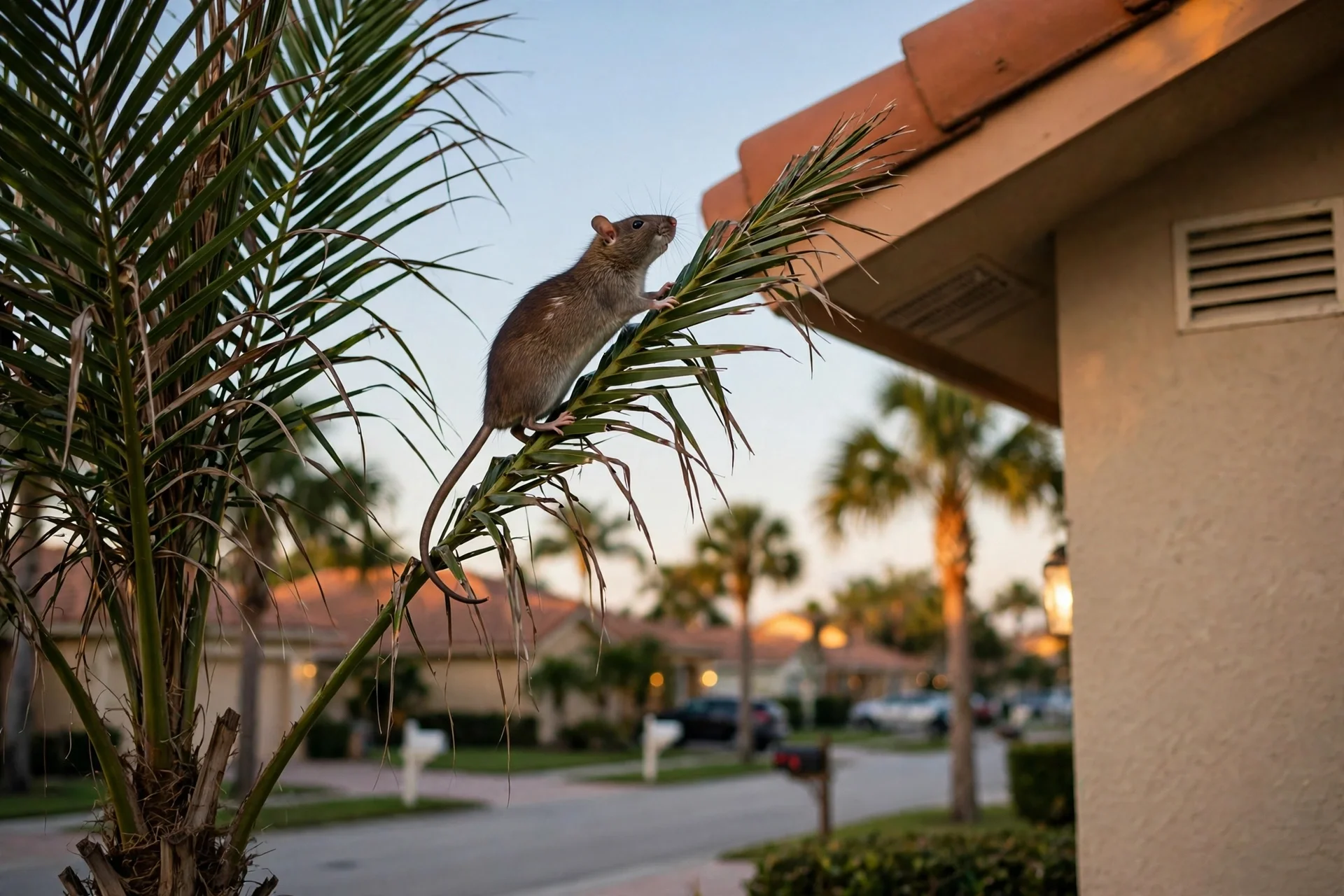
Roof rats live high. They climb palms, citrus trees, and vines onto the roof, and they nest in the attic, the roof voids, and the upper wall spaces. Their signs sit overhead: scratching and running sounds above the ceiling, droppings in the attic insulation, rub marks on the beams, and gnawed wires. Our palms and citrus give them a highway onto every roof.
Norway rats live low. They dig burrows in the soft sandy soil, nest under slabs and in crawl spaces, and travel along the ground floor, the garage, and the base of the walls. Their signs sit at ground level: fresh holes with dirt fans, runways worn into the grass, droppings along the foundation and behind the water heater, and gnaw marks low on doors and pipes.
Roof rats are stopped by trimming branches and palm fronds back from the roofline, screening the vents, and sealing the gaps along the roof. Norway rats are stopped by closing the ground level gaps, sealing the garage door, and dealing with the burrows against the foundation. A job that seals only the roof leaves the ground floor open, and a job that seals only the ground floor leaves the attic open.
One name causes confusion every year. The rat Floridians call a palm rat is the same animal as the roof rat, and our guide to roof rats vs Norway rats in Florida lays out the names, the size and color differences, and the side by side signs for both species.
Read the Signs Before You Decide Which Rat You Have
Guessing the species wastes time and money, because the trap placement, the sealing, and the cleanup all change with the answer. Three signs settle it.
Droppings. Roof rat droppings are pointed at the ends, about half to three quarters of an inch long, and you find them in the attic and along high runs. Norway rat droppings are blunt at the ends, about three quarters of an inch long, and you find them at ground level, along walls, and near burrows. Fresh droppings are dark and soft, old ones are grey and crumbly, and only fresh droppings mean rats are still there.
Sounds. Running and scratching above the ceiling after dark means the attic, which means roof rats. Scratching low in the walls, near the floor, or under the house means Norway rats working the ground floor and the crawl space. Our guide to rats in the walls explains how the sounds tell you how far a colony has spread.
Entry points. Look high for roof rats: vent covers, soffit gaps, and the line where the roof meets the wall. Look low for Norway rats: pipe entries, foundation cracks, the garage door seal, and the gap under an outside door. A rat fits through a gap the size of a quarter, so the hole is smaller than you expect.
Waiting Through Winter Only Grows the Colony
The most common mistake in November is waiting for the rats to leave when the weather warms up. They will not. Roof rats breed all year in South Florida, with no winter pause, so a colony that moves in during November is larger by spring. Our guide to will rats leave on their own explains why a house with food, warmth, and shelter is a home rats never volunteer to leave.
The damage grows with the colony. More rats mean more gnawing on wires and pipes, more droppings in the insulation, and more scent trails guiding the next rats to the same gaps. A small job in November becomes a large job in February.
If you leave for the season, an empty house in the cooler months is a quiet house, and rats move in without anyone hearing them. Before you lock up, or when you return, our guide to opening a snowbird home shows how to check for rats that moved in while you were away.
Seal the House Before the Next Cold Night
The fix follows one order. Remove the rats first, clean the signs they left, then seal the house. Sealing first traps rats inside the walls, and trapping without sealing invites the next colony through the same gaps.
Start with removal. Traps set along the dark edges and pipes where rats travel, checked every day, until the tests stay clean for two weeks. For roof rats that means the attic runs and the roofline. For Norway rats that means the ground floor edges, the garage, and the burrow lines.
Then clean. Remove the droppings and nesting material wearing a mask and gloves, wet everything down first so no dust rises, and throw the waste out in sealed bags. Cleaning breaks the scent trails that would guide the next colony to the same gaps.
Then seal, top and bottom, in one job. Cover vents with strong wire mesh, close gaps with metal flashing or copper mesh, never foam alone, because rats chew through foam. Trim branches and palm fronds back from the roofline so no bridge leads onto the roof, and seal the garage door and the pipe entries at ground level. That full sequence is how rodent proofing and exclusion works at Rodent Shield in Boynton Beach, and it ends with the house closed against both species, not just one.
Do the work now, while the colony is small and the nights are only just cooling. Every cold night that passes with the gaps open is another night the rats use to settle in.
Questions Homeowners Ask About Rats in the Cooler Months
Q: Why do rats and mice move indoors during Florida’s cooler months?
A: Cooler nights are the trigger. From late October through February, rats leave the cooling yard for the warmth of the attic, the wall voids, and the garage, and they stay because the house also holds food and a dry nest. Rats do not hibernate in Florida, so the move indoors is not a winter sleep, it is a change of address.
Q: Can I have roof rats and Norway rats in my home at the same time?
A: Yes, and in Boynton Beach it is common. Roof rats live high, in the attic, the roof voids, and the upper walls, while Norway rats live low, in burrows, crawl spaces, and the ground floor. They use different parts of the same property, so they rarely meet. Finding one kind does not rule out the other, and the fix has to seal the roof and the ground floor in the same job.
Q: When is rat season in Boynton Beach?
A: Rat activity peaks from late October through February, when cooler nights push rats indoors. The rats you hear in February usually arrived in November, which is why the cooler months are the time to act, not to wait.
Q: How do I know if the rats are in the attic or under the house?
A: Listen and look. Running and scratching above the ceiling after dark, with droppings in the attic insulation, means roof rats overhead. Scratching low in the walls or under the floor, with fresh holes in the yard and droppings along the foundation, means Norway rats at ground level. Droppings in both places mean both species.
Q: Will the rats leave when the weather warms up again?
A: Almost never. Roof rats breed all year in South Florida with no winter pause, so a colony that moves in during the cooler months is larger by spring, not smaller. A house with food, warmth, and shelter is a home rats never volunteer to leave. Waiting only grows the colony, so the right time to act is the week you first hear them.
Q: What should I check first if I hear scratching in November?
A: Start in the attic after dark and listen for five minutes, then walk the roofline in daylight for lifted shingles, cracked vent covers, and gaps where the roof meets the wall. Pick up fallen fruit the same day, check the garage door seal for daylight, and look for fresh holes along the foundation. Fresh dark droppings mean rats are still active.
The cooler months do not bring rats to Boynton Beach. The rats are already here, in the palms, the citrus, and the sandy soil. What the cooler months change is the address, from the yard to the house, and the week you first hear scratching is the week to act, while the colony is small and the gaps are few.
Now you know why rats move indoors when the weather cools, how to tell a roof rat colony from a Norway rat colony, and what to check this week. If the signs point to rats already inside, or to both species at once, do not wait for spring.
If your Boynton Beach home has rats moving in for the cooler months, book a rodent inspection with Rodent Shield. We will map every entrance, top and bottom, confirm which species you have and whether the colony is still active, and lay out the removal, cleaning, and sealing plan before any work begins. Call 728 300-9010.
Rats Moving Into Your Boynton Beach Home This Cooler Season?
Rodent Shield provides fast, professional rat removal and exclusion in Boynton Beach. Call today for a free inspection and a clear plan to keep rats out for good.
Call 728 300-9010