
How Small a Hole Can a Rat Fit Through?
Entry Point Guide · Boynton Beach
How Small a Hole Can a Rat Fit Through?
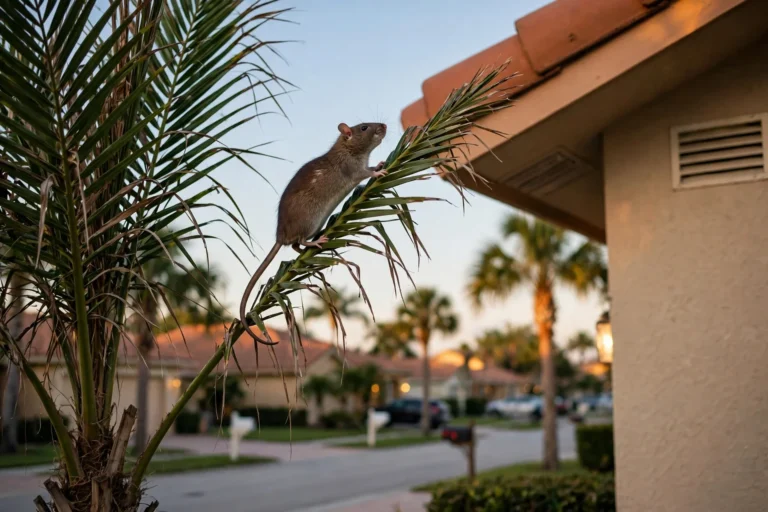
A rat can fit through a round hole the size of a quarter. A horizontal gap as small as half an inch is enough for an adult rat, and a house mouse needs only a gap the size of a dime. If you live in Boynton Beach, that fact changes how you should look at your home, because roof rats here do not need a broken vent or an open door. They need one small gap where the roof meets the wall, and palm trees give them the bridge to reach it.
This guide gives you the exact sizes, the reason rats can compress their bodies so far, the entry points to check first on a South Florida home, the materials that actually stop them, and the one mistake that turns a sealing job into a bigger problem.
The skull rule decides every gap
A rat fits through a hole based on its skull, not its body. The skull is the one part that cannot compress. If the head passes through, the rest of the body follows, because the ribs flex and the fur flattens. That is why a fat looking rat can still vanish through a gap that looks far too small for it.
An adult rat needs a round hole about 25 millimetres across, which is the size of a quarter. A horizontal gap is easier for a rat than a round hole, because the rat can flatten itself, so half an inch of height under a door or along a pipe can be enough. Young rats fit through even smaller gaps, down to about 12 millimetres, which is why a home sealed only against large rats can still let juveniles in.
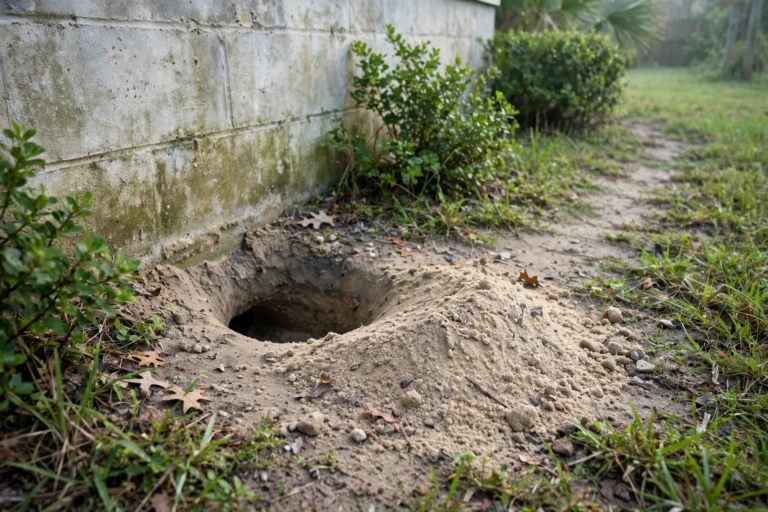
The species matters too. Roof rats are slim climbers, and they use small high gaps at the roofline. Norway rats are stockier and stay near the ground, so they use foundation cracks, gaps around ground level pipes and worn door sweeps. House mice are smaller than both, and a gap the size of a dime, about 6 millimetres, is enough for a mouse. When you seal a home, seal to the mouse size, because a gap that stops a rat may still admit a mouse.
Rats also make gaps bigger. A rat that finds a small crack will gnaw at the edges until the opening suits it. A gap you ignore this month can be a wide entry point by next month, especially around soft wood, plastic vent covers and foam filler.
Walk the roofline first in a Boynton Beach home
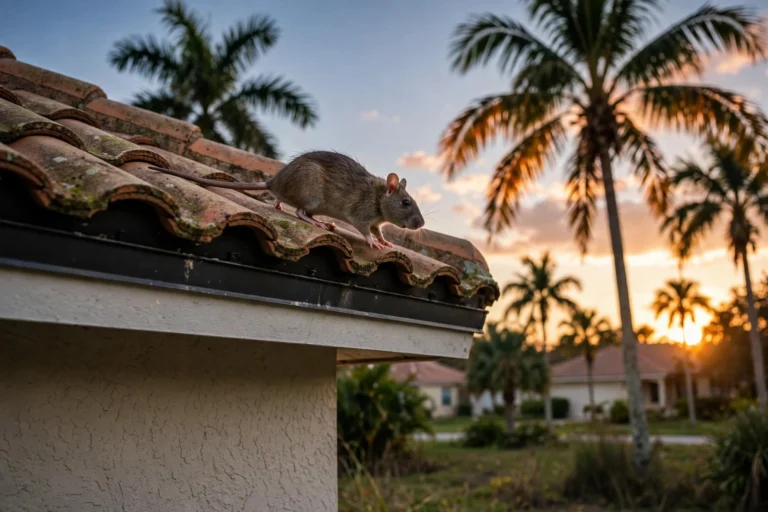
Roof rats reach most Boynton Beach homes from above, not from the ground. They climb palm fronds, oak branches, fences and power lines, then cross onto the roof and hunt for a gap. Start your check at the roofline, and work down.
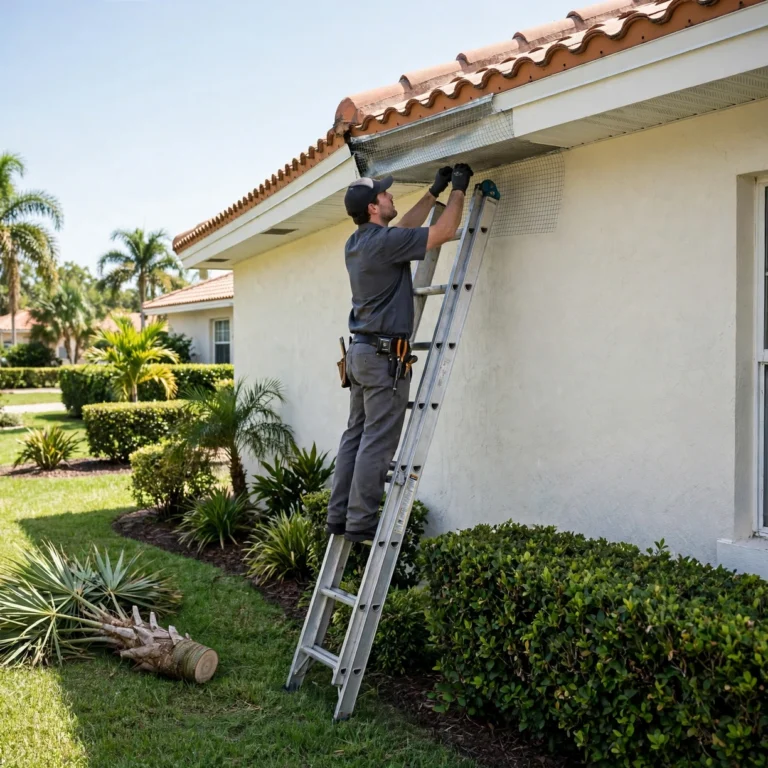
Soffits and fascia boards are the first place to look. Heat and storms loosen soffit panels over time, and a corner pulled away from the fascia leaves a direct route into the attic. Check every corner and every joint, not just the ones you can see from the ground.
Barrel tile roofs need a close look at the eave line. The open ends under curved tiles leave a row of gaps along the roof edge, and rats use them as doors. Birds nest in the same openings, which tells you the gaps are open.
Roof vents, ridge vents and gable vents are next. A vent screen with a torn corner or a missing slat is an open invitation. Plumbing boots, the rubber collars around roof pipes, crack in the Florida sun, and the gap around the pipe underneath is a classic rat entry.
Air conditioning line holes deserve attention on every home. The hole where the AC lines pass through the wall is often cut larger than the lines, and the leftover space is rarely sealed well. Dryer vents and bathroom vent covers belong on the same list.
Garage door seals wear out and leave a half inch gap along the bottom, which is exactly the height a rat needs. Pool cage frames and lanai screens are a Boynton Beach special case. A loose screen panel or a gap where the cage frame meets the house wall gives rats a sheltered route onto the roof and into wall voids.
If you find gaps, note each one before you seal anything. A full list matters, because sealing nine gaps and missing the tenth leaves the rats a way back in.
Read the signs that mark an active gap
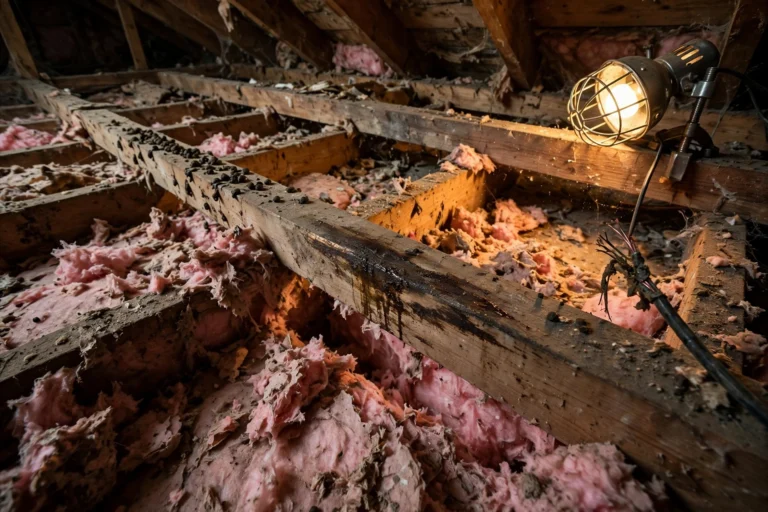
A gap is only a hole until rats start using it. Active gaps carry signs. Look for dark rub marks where the oil in rat fur smears beams, pipes and wall edges near the opening. Look for fresh droppings close to the gap, dark and pointed, about half an inch long. Look for gnaw marks on the wood or plastic around the opening, where rats widened it to suit themselves.
A gap with smooth worn edges and fresh signs is in daily use. A gap full of cobwebs and dust is probably old and quiet. When the signs are fresh, the next step is a full Rodent Inspection so the species, the entry points and the size of the problem are confirmed before removal begins.
Use the coin test around your home
You do not need special tools to judge a gap. Carry a quarter and a dime. If a quarter fits through a round hole, a rat fits through it. If a dime fits through a gap, a mouse fits through it. A gap that fails the dime test is the only gap you can call sealed.
Test the spots rats actually use. Hold the coins at soffit joints, vent covers, pipe entries, AC line holes, door sweeps and garage seals. Pay attention to corners, because a gap that looks tight in the middle can open up at the corner where two boards meet. Test after storms too, because wind and rain shift panels and open gaps that were tight last season.
The coin test also tells you when a gap is too big for a quick fix. A hole wider than a quarter needs mesh or sheet metal behind the sealant, not sealant alone, because rats chew through soft filler in days.
Seal with materials rats cannot chew
The material matters as much as the sealing itself. Rats chew through foam filler, soft plastic and thin caulk with ease. A gap sealed with foam alone is a gap that will open again.
Steel mesh is the standard for small holes. Pack the mesh into the gap, then seal over it with exterior grade sealant. For larger openings, use hardware cloth, sheet metal or cement board. Fit door sweeps on exterior doors and garage doors so no half inch gap remains at the bottom.
Homes near the coast need one extra thought. Plain steel wool rusts fast in salty air, and rusted mesh falls apart. Stainless steel mesh or copper mesh lasts far longer near the coast, so use those for exterior gaps in Boynton Beach. That small choice is the difference between a seal that holds for years and one that fails in a single wet season.
The sealing work itself, done across a whole home, is what a Rodent Proofing and Exclusion service covers. If the signs point to roof rats, a dedicated Roof Rats removal plan fits better than general pest control.
Never seal a home while rats are still inside
This is the mistake that turns a good sealing job into a worse problem. If rats are living in your attic and you seal every gap, you trap them inside. Trapped rats chew new holes through drywall, pipes and wiring to escape, and rats that die inside walls leave an odor problem that lasts for weeks.
The order matters. Inspect first, so you know the species and the entry points. Remove the rats second, with traps placed on their active routes. Seal third, once activity has stopped. If you find contaminated insulation during the work, that cleanup is covered by an Attic Cleanup service.
If you are unsure whether rats are still active, watch the signs for a few nights. Fresh droppings, new gnaw marks and night sounds mean the attic is still occupied. Seal only when the signs stop.
Storm damage opens new gaps every hurricane season
Hurricane season is a gap making machine for Boynton Beach homes. Wind lifts soffit panels, loosens fascia boards and shifts roof tiles, and each loose panel is a new entry point. Rain then drives rats toward dry shelter, so the weeks after a storm are peak entry season.
Walk your roofline after every major storm, even if the roof looks fine from the street. Check soffit corners, vent covers and the eave line under barrel tiles. A gap opened by a storm and left through the winter becomes a permanent rat door, because rats follow scent trails left by earlier rats straight back to it.
Think your home has a gap rats can use? Book a Rodent Inspection and let us find every entry point before it grows into damage. Call 728 300-9010.
Schedule an InspectionFrequently Asked Questions
How small a hole can a rat fit through?
A round hole the size of a quarter, about 25 millimetres across, admits an adult rat. A horizontal gap as small as half an inch in height is also enough, because a rat flattens its body to pass. Young rats fit through gaps down to about 12 millimetres.
Can a mouse fit through a smaller hole than a rat?
Yes. A house mouse needs only a gap the size of a dime, about 6 millimetres. That is why sealing should always be judged by the mouse size. A home sealed only against rats can still admit mice.
Can rats chew a hole bigger to get in?
Yes. Rats gnaw every day to keep their front teeth short, and they will widen a small crack until it suits them. Soft materials like foam filler and thin plastic slow them down for days at most. Steel mesh, hardware cloth and sheet metal are the materials that stop them.
What material stops rats from chewing through a sealed gap?
Steel mesh packed into the gap and sealed over with exterior grade sealant works for small holes. Larger openings need hardware cloth, sheet metal or cement board. Near the coast, use stainless steel mesh or copper mesh, because plain steel wool rusts and falls apart in salty air.
Should I seal every gap in my home myself?
Small gaps around pipes and vents are fine to seal yourself with mesh and sealant, as long as you are sure no rats are living inside. If rats are active in your attic, seal nothing until they are removed, or you will trap them inside. A professional inspection finds every gap, including the roofline gaps you cannot see from the ground.
About Us
Rodent Shield Boynton Beach is a local team specializing in rat removal, mice control, rodent exclusion, attic cleanup, and crawl space services across the Boynton Beach area. We use targeted, pet-friendly methods and tailor every plan to the neighborhood and home we are working in.
Our Address
Rodent Shield Boynton Beach
3050 SW 14th Pl
Boynton Beach, FL 33426
📞 728 300-9010
✉ hello@rodentcontrolboyntonbeach.com
Monday to Saturday, 8am–8pm
© 2026 rodentcontrolboyntonbeach.com. All rights reserved.
Licensed & Insured · Serving Boynton Beach & Palm Beach County