You Found a Nest of Baby Rats: What to Do Next (and What Not to Touch)
FOUND A NEST OF BABY RATS
You Found a Nest of Baby Rats: What to Do Next (and What Not to Touch)
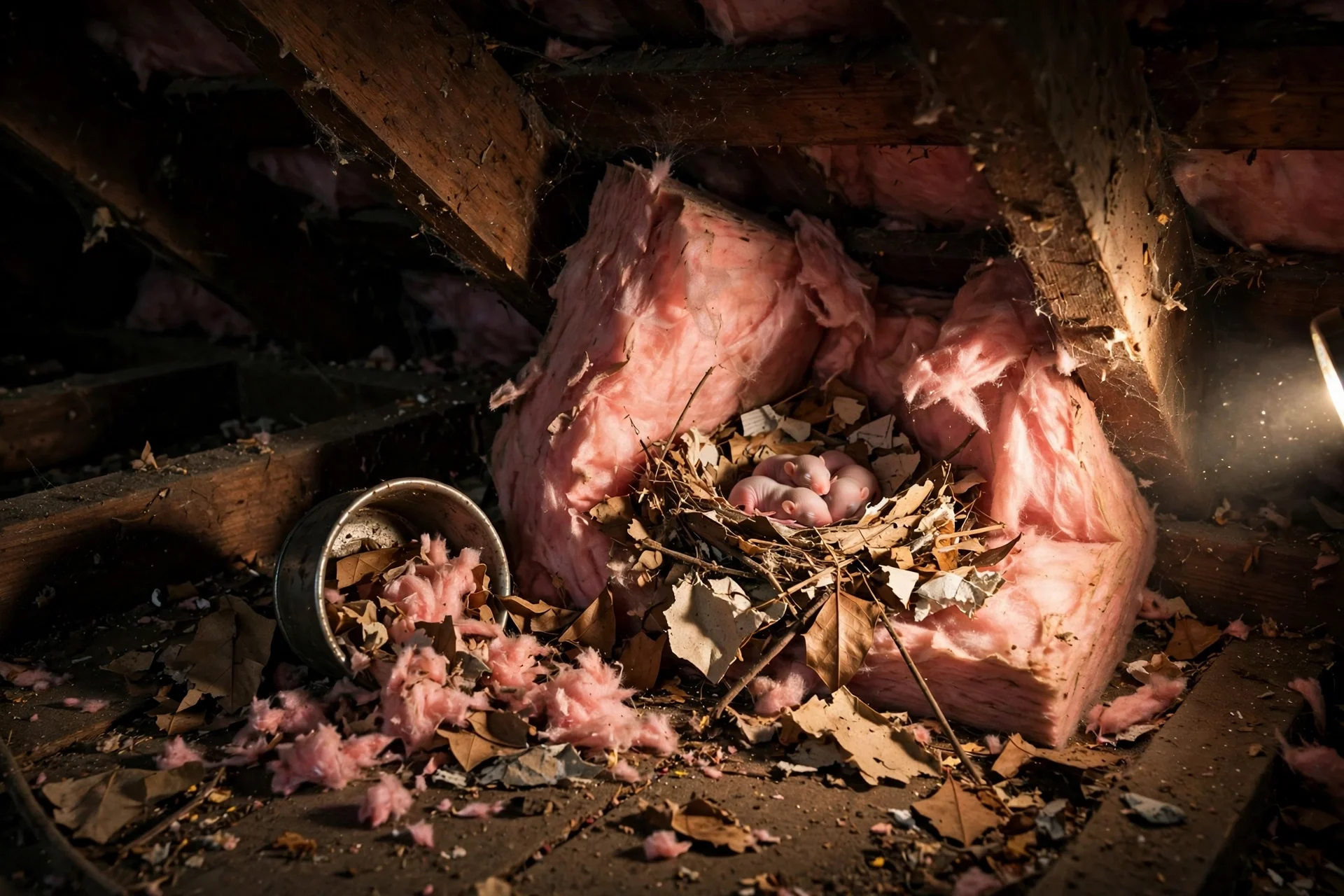
You moved a box in the garage, or you stepped into the attic, and there it was: a small pile of shredded insulation and torn paper, with tiny pink bodies curled inside it. Your first thought is what to do with the babies. Your second thought should be what the nest means. A nest means a colony, not one rat. A mother rat does not build a nest in a house she is only passing through. This guide gives you the order of what to do next, what not to touch, and when to call a professional, because the wrong first move turns a nest into a much bigger problem.
Stop and Look Before You Touch Anything
The first step is the simplest and the hardest: stop. Put the box down, step back, and look at the nest from a few feet away. Do not pick up the babies, do not poke the nest, and do not try to carry it outside. You need to know three things before you do anything else, and you can learn all three without touching a thing.
Where the nest is. An attic nest, a garage nest, and a nest inside a wall void each point to a different entry route and a different fix. Note the spot, or take a photo from where you stand.
Whether the babies are alive and warm. Pink, wriggling pups are a live nest. Cold, still pups with no fresh droppings around them may already be abandoned or dead, and that changes the cleanup, not the urgency.
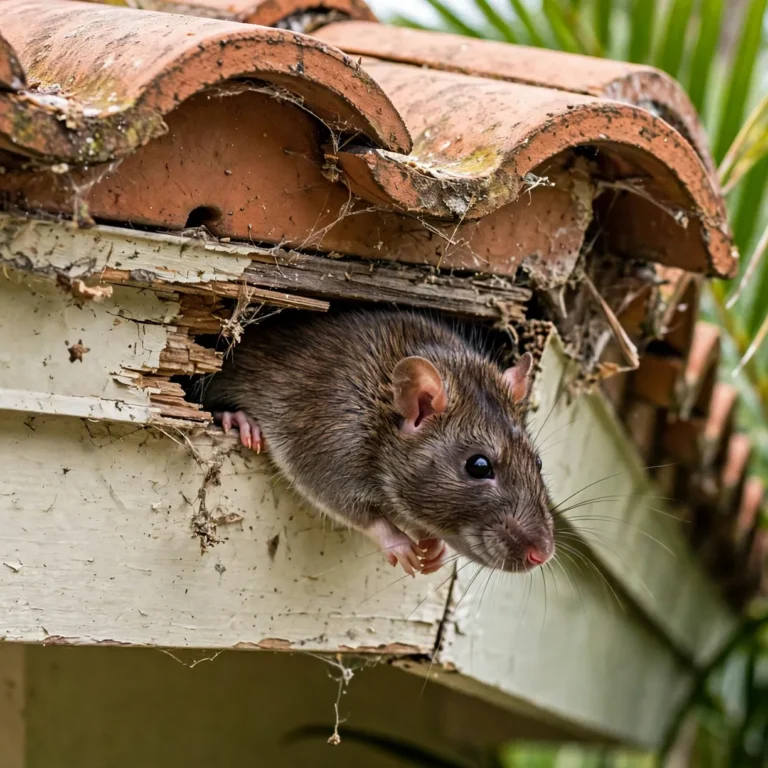
Whether there is a way in nearby. Look for the signs of the adults: fresh dark droppings, greasy rub marks along a beam or a wall edge, gnawed cardboard, and a gap, vent, or pipe entry within a few feet. The adults use a route to reach the nest, and that route is the real problem to fix.
Once you have looked, leave the area alone. Close the attic hatch or the garage door behind you, keep children and pets away from the spot, and wash your hands with soap and water even if you touched nothing.
Know What a Rat Nest Looks Like
A rat nest is not a neat bird nest. It is a loose ball or shallow bowl of whatever soft material the mother could find, packed into a dark, warm, hidden corner. In a Boynton Beach home, that is usually shredded attic insulation, torn paper or cardboard, fabric from stored clothes, and dry leaves from the yard. The nest is about the size of a dinner plate, and it sits where the mother can reach it in the dark.
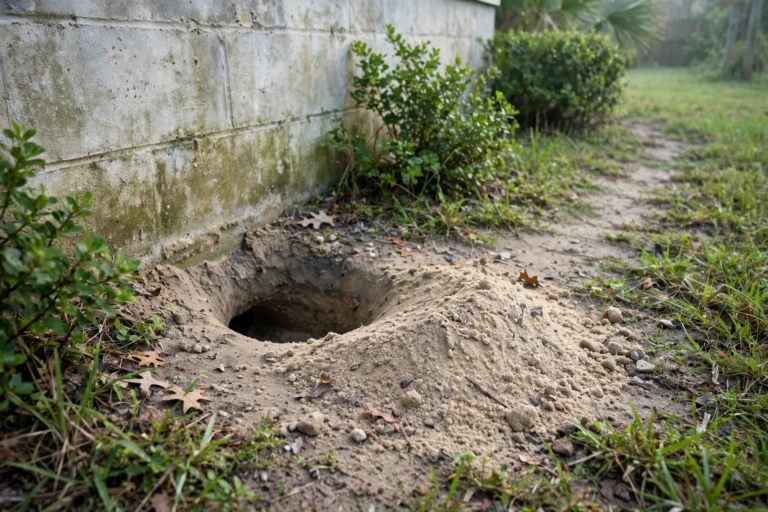
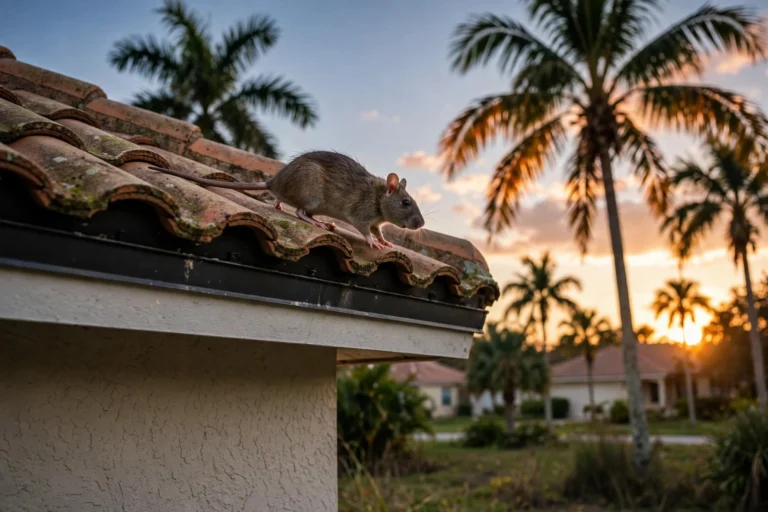
Roof rats nest high: in the attic insulation, in the roof voids, and in the upper wall spaces near the roofline. A nest in the attic almost always means roof rats, the climbing species that uses palm fronds and citrus branches as a highway onto the roof. Norway rats nest low: in burrows against the foundation, under slabs, in crawl spaces, and in ground floor clutter in the garage.
A nest in a wall void is the hardest to find. You may never see it. The signs are sounds instead: faint high pitched squeaking behind the drywall, soft rustling in one spot, and a musty smell that grows over a few days. Our guide to rats in the walls explains how the sounds tell you where a colony is living when you cannot see the nest at all. Fresh droppings near a nest tell you the adults are still active. Dark, moist droppings mean rats were there in the last day or two, and dry, grey droppings mean the nest may be old.
Do Not Touch or Move the Babies
Do not touch the baby rats with your bare hands, and do not move them, with gloves or without. There are three reasons.
Disease. Rat nests carry the same risks as the rats themselves. Leptospirosis spreads through urine and can enter through a cut or through the eyes and mouth. Hantavirus spreads through dried urine and droppings, and the dust rises when you disturb a nest. Salmonella spreads through droppings on surfaces the babies have crawled across. Our guide to hantavirus in Florida lays out how the virus spreads and why a nest is the worst place to breathe dust.
Parasites. A nest is full of fleas and mites that live on the babies and in the nesting material. They move onto the nearest warm body, which is you, and handling a nest, even briefly, can leave you with bites and a flea problem on top of the rat problem.
The mother. A mother rat defending her young will bite, and she bites fast. She is usually close by, watching from a dark corner or a gap in the wall. A bite from a wild rat is a medical visit, not a wash and forget moment.
Gloves do not fix any of this. They keep the germs off your hands, but they do nothing about the dust in the air, the fleas on the material, or the mother in the corner. And moving the babies does not help the babies. A nest moved outside, even a few feet, is a nest the mother may not find again, and baby rats without their mother die quickly. They cannot be saved by the homeowner.
Leave the Nest Alone Overnight and Watch for the Mother
Once you have looked and stepped back, the next step is to do nothing for one night. The mother rat is almost always nearby. She leaves the nest to feed and comes back to nurse, and if you leave the nest alone overnight, she will often move the pups herself to a safer spot, sometimes to a second nest you have not found yet. That does not solve the colony, but it tells you the nest is active and the mother is alive.
Check the nest from a distance the next morning. If the babies are gone, the mother moved them. If they are still there and warm, she is still feeding them. If they are cold and still, she may already be gone, and the pups are dying. In every case, the next step is the same: call a professional, because the colony is the problem, not the single nest you found.
One night of waiting is safe only if the nest is in a space you can close off, an attic, a garage, or a storage room. If the nest is in a lived in space, a kitchen, a bathroom, or a bedroom, do not wait the night out. Close the room and call the same day.
The Mistake That Turns a Nest Into a Smell in the Wall
The most common mistake after finding a nest is dealing with the adults first. People set traps or lay poison, and they feel better when the traps fill up. Then the babies are still in the nest, and no one is left to feed them.
Baby rats cannot feed themselves. Without the mother, they starve and die where they lie, usually out of reach: deep in the attic insulation, inside a wall void, or under a slab. A dead nest inside a wall produces a smell that grows over days and lasts for weeks. Our guide to the smell of a dead rat in the wall explains why the smell lasts so long and why the only real fix is finding and removing the body.
Poison makes this mistake worse. A poisoned rat does not die where you can see it. It dies in the wall, in the insulation, or under the floor, and the babies die in the nest beside it. That is two smell problems instead of one, and the poison stays in the bodies long enough to harm a pet or an owl that finds them.
A Nest Means a Colony, and the Colony Breeds All Year
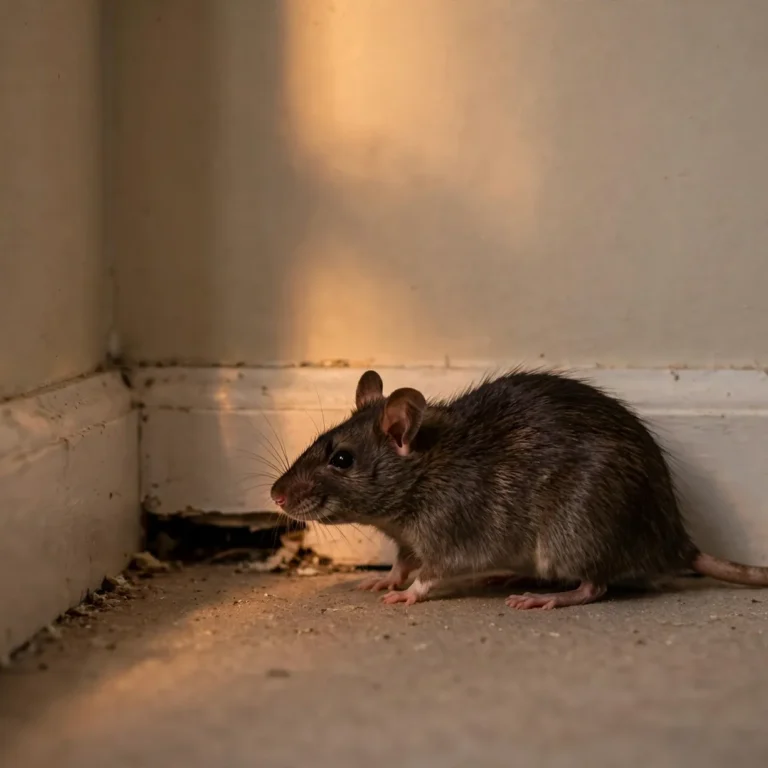
A nest is not a one rat problem. A mother rat with a nest has a mate nearby, older young from an earlier litter hiding in the same house, and a food source close enough to feed them all. The nest you found is the visible part of a colony that has been living in your house for weeks.
In South Florida, rats breed all year, with no winter pause. A single female can produce several litters in a year, and our guide to how many rats are in your house lays out the breeding math in full. Every litter you leave in place becomes the next generation of the colony.
A nest also tells you three things about your house. It has food within reach, or the mother would not have stayed. It has warmth and shelter, or the pups would not survive. And it has an entry point the adults use every night.
What a Professional Visit Does About a Nest
A professional visit for a nest starts with an inspection, not a trap. The inspector maps the house from the roofline to the foundation, finds every entry point, and looks for the nests you have not seen, because a house with one visible nest usually has more. A rodent inspection in Boynton Beach covers the attic, the roof voids, the garage, the crawl space, and the wall lines, and it ends with a plan laid out before any work begins.
Removal comes next, and the order matters. The colony is removed as a whole, adults and nests together, so no young are left to starve in a wall. Traps are set along the dark edges and pipes where rats travel, checked every day, and the nests come out with the nesting material, wearing a mask and gloves, with everything wet down first so no dust rises. That is the work our rat removal service does in Boynton Beach.
Cleanup follows removal. The droppings, the nesting material, and the soiled insulation come out in sealed bags, and the area is cleaned to break the scent trails that would guide the next colony to the same gaps. In the attic, our attic cleanup service covers the removal of soiled insulation and the cleaning of the space the rats lived in.
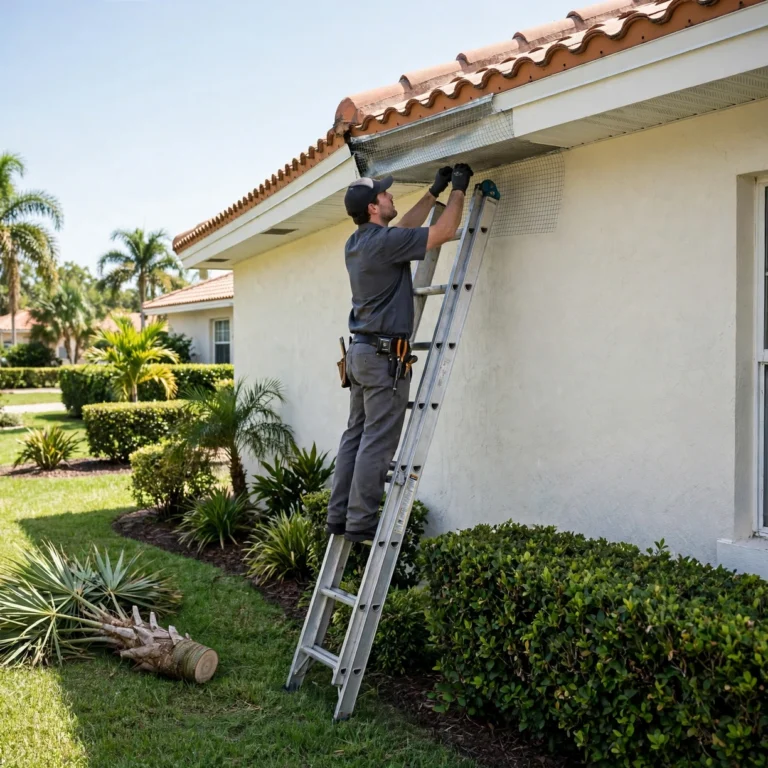
Sealing comes last, and it is the step that makes the job permanent. Vents are covered with strong wire mesh, gaps are closed with metal flashing or copper mesh, never foam alone, because rats chew through foam. The garage door seal, the pipe entries, and the roofline gaps are closed in the same job. That full sequence is how rodent proofing and exclusion works at Rodent Shield, and it is the only part of the job that stops the problem from coming back.
Questions Homeowners Ask After Finding a Nest of Baby Rats
Q: What should I do if I find a nest of baby rats in my garage or attic?
A: Stop, look, and do not touch the babies. Note where the nest is, check for fresh droppings and entry points nearby, then leave the area alone and close it off. Leave the nest overnight if the space can be closed, check it from a distance in the morning, and call a professional the same day if the nest is in a lived in room. A nest means a colony, so the fix is the full job: inspection, removal, cleanup, and sealing.
Q: Is it safe to touch or move baby rats I found?
A: No. Baby rats and their nest carry leptospirosis, hantavirus, and salmonella, plus fleas and mites that move onto the nearest warm body. The mother may also bite. Gloves do not make it safe, because they do nothing about the dust in the air or the mother nearby, and a moved nest is a nest the mother may not find again. Do not touch them, do not move them, and do not try to keep them.
Q: Will the mother rat come back for her babies?
A: Usually yes, if she is alive and the nest is left alone. The mother leaves the nest to feed and comes back to nurse, and she will often move the pups herself to a safer spot overnight. If the babies are still warm in the morning, she is still feeding them. If they are cold and still, she may already be gone, and the pups will not survive without her. Either way, the colony is still in the house.
Q: Can I just leave the nest alone and wait for the rats to leave?
A: No. Rats do not leave a house that gives them food, warmth, and shelter, and in South Florida they breed all year, so the colony only grows while you wait. A nest left alone becomes the next generation of the colony. The nest is the sign to act, not the sign to wait.
Q: What happens if I kill the adult rats and leave the babies in the nest?
A: The babies starve and die where they lie, usually out of reach inside a wall or deep in the attic insulation, and the smell lasts for weeks. Poison causes the same problem twice over, because the poisoned adults also die inside the walls. Find every nest first and remove the colony as a whole, so no young are left behind.
Q: How do I stop rats nesting in my house again?
A: Close the house after the colony is gone. Seal every gap the rats used, top and bottom, with metal flashing or copper mesh, never foam alone. Cover vents with strong wire mesh, fix the garage door seal, trim branches and palm fronds back from the roofline, and take away the food: lidded bins, no pet food left out overnight, and fallen fruit picked up the same day. Sealing is the only step that stops the next colony, and it comes after removal, not before.
You did not find a cute problem. You found a colony, and the colony is the problem. The babies in the nest are the reason to act carefully, not the reason to act slowly, and the house will not fix itself while you wait.
If you found a nest of baby rats in your Boynton Beach home, call Rodent Shield Boynton Beach at 728 300-9010 for a free inspection. We will find every nest, map every entry point, and lay out the removal, cleanup, and sealing plan before any work begins. We serve Boynton Beach, Delray Beach, Lake Worth Beach, Lantana, Hypoluxo, Ocean Ridge, and Boca Raton, Monday to Saturday, 8am to 8pm.
Found a Nest of Baby Rats in Your Boynton Beach Home?
Rodent Shield provides fast, professional rat removal and exclusion in Boynton Beach. Call today for a free inspection and a clear plan to find every nest and keep rats out for good.
Call 728 300-9010