Opening Your Snowbird Home in Boynton Beach: How to Check for Rats That Moved In While You Were Away
Snowbird Home Rat Check
Opening Your Snowbird Home in Boynton Beach: How to Check for Rats That Moved In While You Were Away
You unlock the door, roll your bags in, and the house feels still and warm after six quiet months. Then you open a kitchen cabinet and find small dark pellets next to the cereal. Or you hear a soft scratching above the bedroom on your very first night back.
This scene plays out across Boynton Beach every November. Seasonal residents return just as Florida rat activity reaches its peak, and a house that sat empty from May to October is the best shelter a roof rat could ask for: quiet, dry, safe from predators, and full of hiding places. Nobody heard the scratching. Nobody saw the first droppings. A small problem had months to grow into a settled colony.
This guide walks you through your first hour back in the house: what to check first, what the signs mean, what to throw away, and how to make sure next season starts clean.
Look Before You Unpack or Clean
Your first walk through the house is an inspection, not a tidy up. Cleaning first wipes away the very signs that tell you where the rats have been living, so look first and clean second.
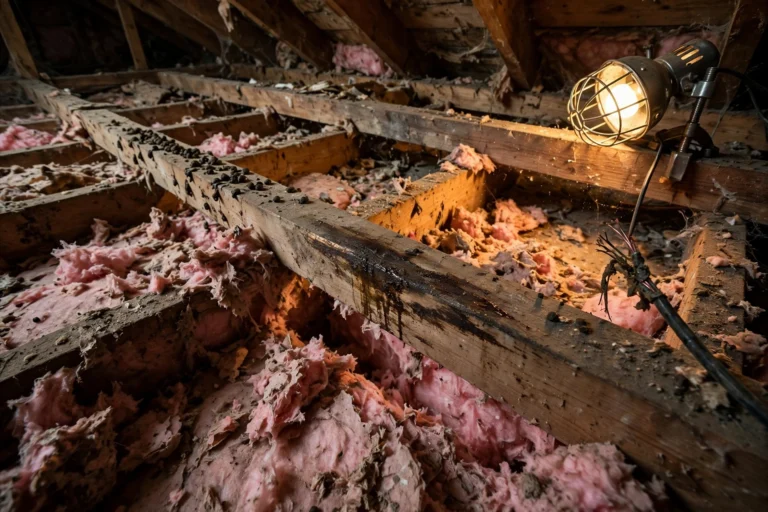
Start in the garage. Check the corners, the top of the water heater, and stored boxes for droppings, shredded paper, and nesting material. Then move to the kitchen and open every cabinet and drawer, especially under the sink. Then check the attic hatch: before you climb up, look at the hatch edges and the insulation you can see for droppings, dark rub marks, and tunnels pressed into the insulation.
You are looking for four signs. Fresh droppings are dark and soft; old ones are grey and crumble. Rub marks are greasy dark smears along pipes, beams, and wall edges where rats run the same path every night. Gnaw marks show on wood, plastic pipes, and stored items. A sweet, stale, musky smell in a closed room is the colony itself. Our guide to rat droppings shows exactly what roof rat droppings look like next to a coin, so you can rule out lizards and roaches, which leave very different signs.
If the attic sounds busy at night, our guide to what rats in the attic sound like will help you read what you are hearing.
Droppings in the Cabinets Mean Rats Used Your Kitchen
Finding droppings where your food lives is the moment most returning owners call us, and it deserves a careful response, because the kitchen is where rats do the most direct harm to your health.
Throw away every opened food package, and every sealed package with chew marks, holes, or droppings on it. When in doubt, throw it out: rats walk through food areas with urine on their feet and tails, and no packet is worth the risk. Cans and hard sealed jars can be washed and kept.
Clean the cabinets the wet way. The Centers for Disease Control and Prevention is clear on this point: never sweep or vacuum dry droppings, because that puts contaminated dust into the air you breathe. Put on gloves, soak the droppings and nesting material with a bleach solution or disinfectant, let it sit for five minutes, then wipe it up with paper towels and seal everything in a bag for the outside bin. Wipe the shelves down again before any food goes back in.
Then ask the harder question. Rats in the cabinets means rats have a route into the house and a reason to stay. Cleaning the shelf does not close the route.
An Empty House Still Lets Rats In
Owners often ask how rats got in when nobody was home to leave a door open. The answer is that a closed house is not a sealed house, and a Florida summer quietly opens new doors.
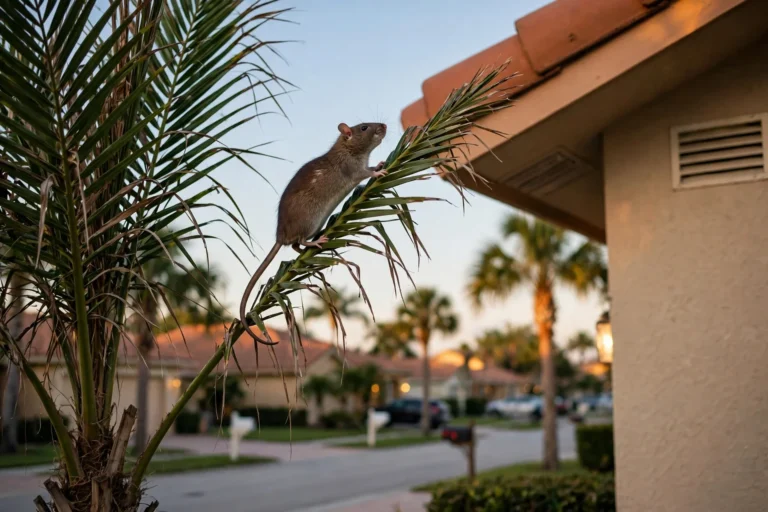
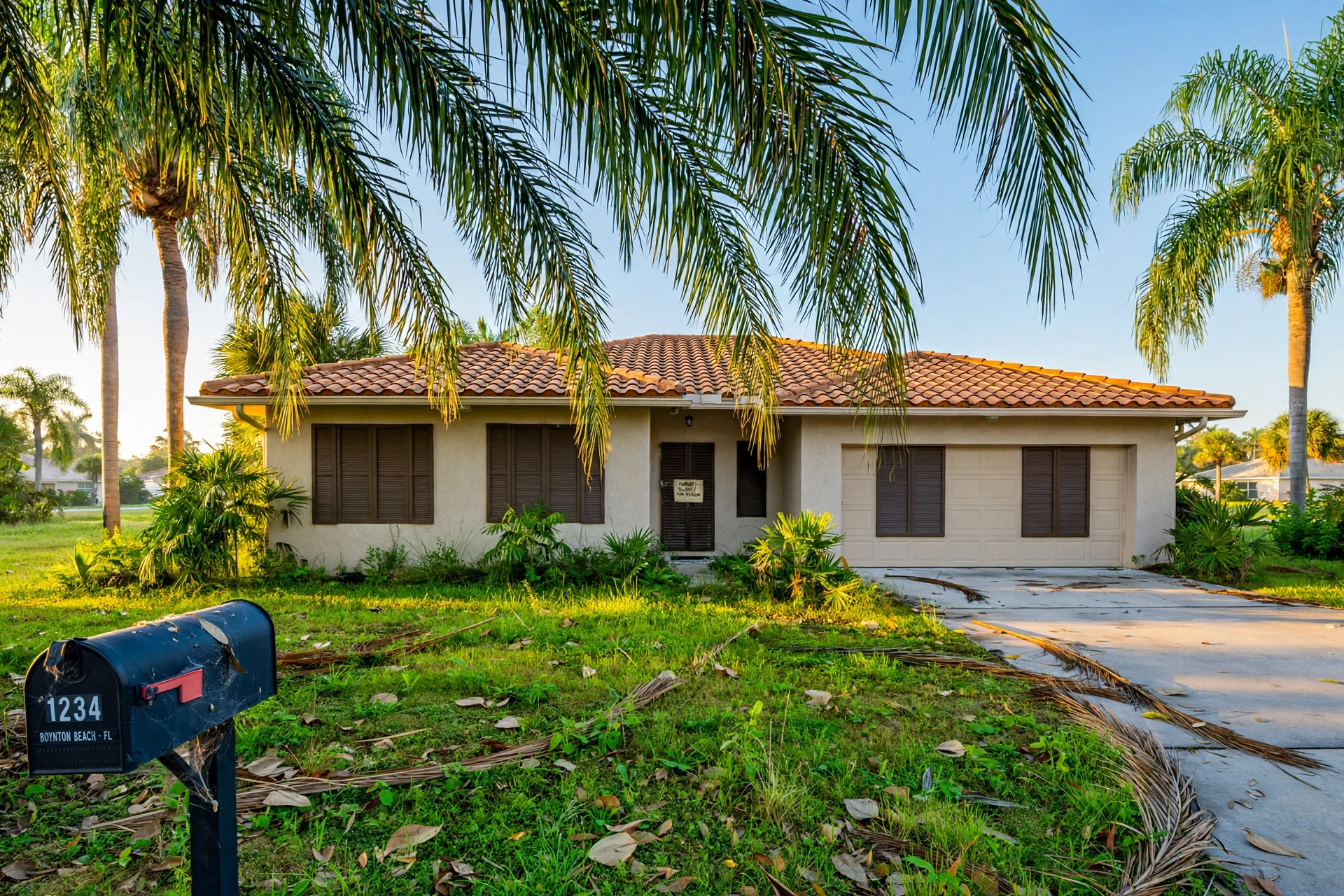
Palm trees are the first one. Six months of growth and storm season push fronds onto the roof, and fronds touching tiles are a bridge. Roof rats climb palms to feed, they nest in dead frond skirts, and they can jump more than four feet sideways from a limb to your roof. One summer of growth can connect a palm straight to a roof vent.
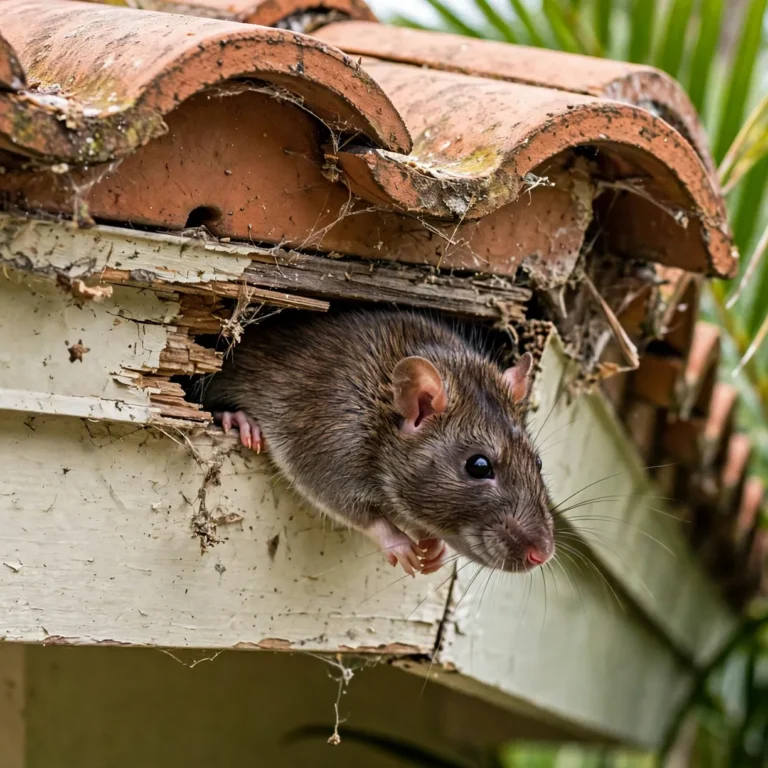
The other doors were always there, just unwatched: a lifted soffit corner, the gap where the air conditioner lines enter the wall, a roof pipe with a cracked seal, a garage door corner that no longer meets the floor. In an occupied house, the first rat gets noticed in a week. In an empty house, it gets noticed in November, after it has raised two litters in your attic insulation.
This is also why the yard matters on your first walk. New holes along the foundation outside can be a rat burrow, and our guide to rat holes in your yard shows how to tell an active burrow from an old one.
Check Under the Hood Before You Start the Car
If your car sat in the garage all summer, do not turn the key first. Open the hood and look.
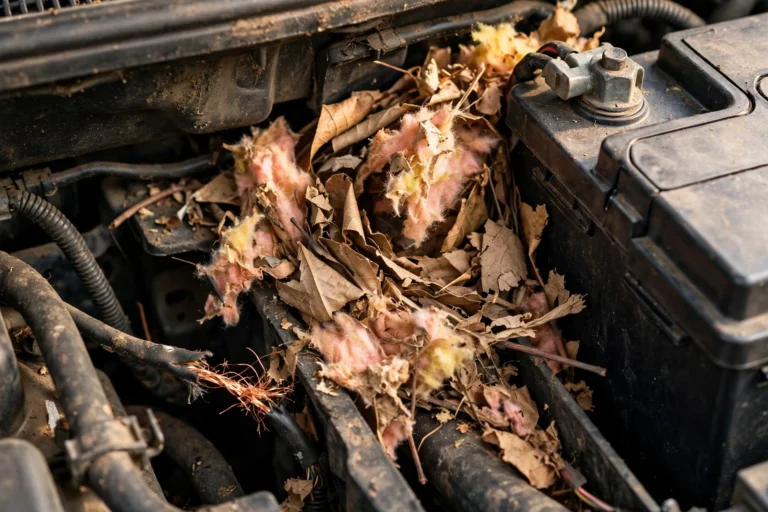
A parked car is a warm, dark, sheltered box, and palm rats, which are the same animal as roof rats, nest in engine bays across South Florida every summer. Look for nesting material packed around the engine, droppings on flat surfaces, and chewed insulation or wire covers. Shredded hood liner is a classic sign.
Starting the car on a nest can kill the animal in the belts, scatter nesting through the engine, and turn a rodent problem into a repair bill. If you find signs, have the car checked before you drive it, and treat the garage as part of the infestation, because a rat sleeping in your engine bay is living in your house.
A Trained Eye Catches What a Quick Look Misses
A returning owner finds the loud signs: the cabinet droppings, the smell, the nest in the car. The quiet signs decide whether the problem ends or comes back: the second entry point nobody sealed, the early tunnels in the attic insulation, the rub marks on a pipe run that show the colony travels from the attic to the kitchen every night.
A Rodent Shield inspection works through the whole house the way the rats do: attic, roofline, garage, kitchen, and yard, with every entry point found and listed. From there the order of work is the one that actually ends a colony: remove the rats, then seal the home with materials rats cannot chew through, then clean the contaminated areas safely. You can read how removal works on our rat removal in Boynton Beach page.
If you are still up north and a neighbor or home watch service reports signs, we can inspect before you arrive, so the house is handled before your first night back.
Seal the House Before You Leave Next Season
The cheapest snowbird rat problem is the one that never starts, and the work happens in spring, before you close the house. This is how to keep rats out of a vacant house while it sits empty:
Seal first. Every gap at the roofline, soffit, pipes, and air conditioner lines gets closed with metal based materials that rats cannot gnaw through. Do this while you are still in town to check the work.
Trim the bridges. Cut palm fronds and tree limbs back at least six feet from the roof, and clear fallen fruit weekly in season, because fruit on the ground is a feeding station under your roof.
Remove the welcome. No pet food, bird seed, or open food stays in the house or garage over the summer. Store what must stay in hard sealed containers.
Arrange eyes on the house. A neighbor, a home watch service, or our team checking monthly catches the first droppings in week one, when the fix is small, instead of in November, when the colony is settled.
A house sealed this way in April is a house you simply open in November.
Frequently Asked Questions
Q: Did rats move into my Florida home while I was away?
A: It is very common. A vacant Florida home is quiet, dry, and unwatched, and roof rats are active all summer. Droppings in cabinets or the garage, rub marks along pipes, nesting in the attic, or scratching on your first nights back are the signs to look for.
Q: What should I check first when opening a snowbird home in Florida?
A: Check in this order: the garage corners and stored boxes, the kitchen cabinets and under the sink, and the attic hatch and visible insulation. Look before you clean, because droppings, rub marks, and nesting show exactly where the rats have been living.
Q: I found droppings in the kitchen cabinets. What do I throw away?
A: Throw away all opened food and any package with chew marks or droppings on it. Wash cans and sealed jars. Clean the droppings the wet way with disinfectant and gloves, and never sweep or vacuum them dry.
Q: Are palm rats and roof rats the same thing?
A: Yes. Palm rat is the local name for the roof rat, the same species. It climbs palms, nests in dead fronds, and travels from fronds and limbs onto roofs, which is why trimming palms back from the roof matters so much in Boynton Beach.
Q: Can I sleep in the house on the first night if I find signs of rats?
A: Most returning owners do stay, with bedroom doors closed and food sealed away, while the inspection is booked for the next day. If droppings are heavy in sleeping areas, or the smell is strong in a bedroom, a hotel for the first night is the safer call until those rooms are cleaned the wet way.
Q: How do I keep rats out of a vacant house next season?
A: Seal every roofline and pipe gap with materials rats cannot chew, trim palms and limbs at least six feet off the roof, store no open food, and arrange monthly checks while you are away. Sealing before you leave in spring is what stops the November surprise.
Just Opened Your Boynton Beach Home and Found the Signs?
Call Rodent Shield at 728 300-9010 for a full inspection. We find every entry point, remove the rats, and seal the house, so your season starts in a clean home, not a colony’s.
Call 728 300-9010