Rat Holes in Your Yard: How to Tell If a Rat Burrow Is Active
RAT BURROWS IN THE YARD
Rat Holes in Your Yard: How to Tell If a Rat Burrow Is Active
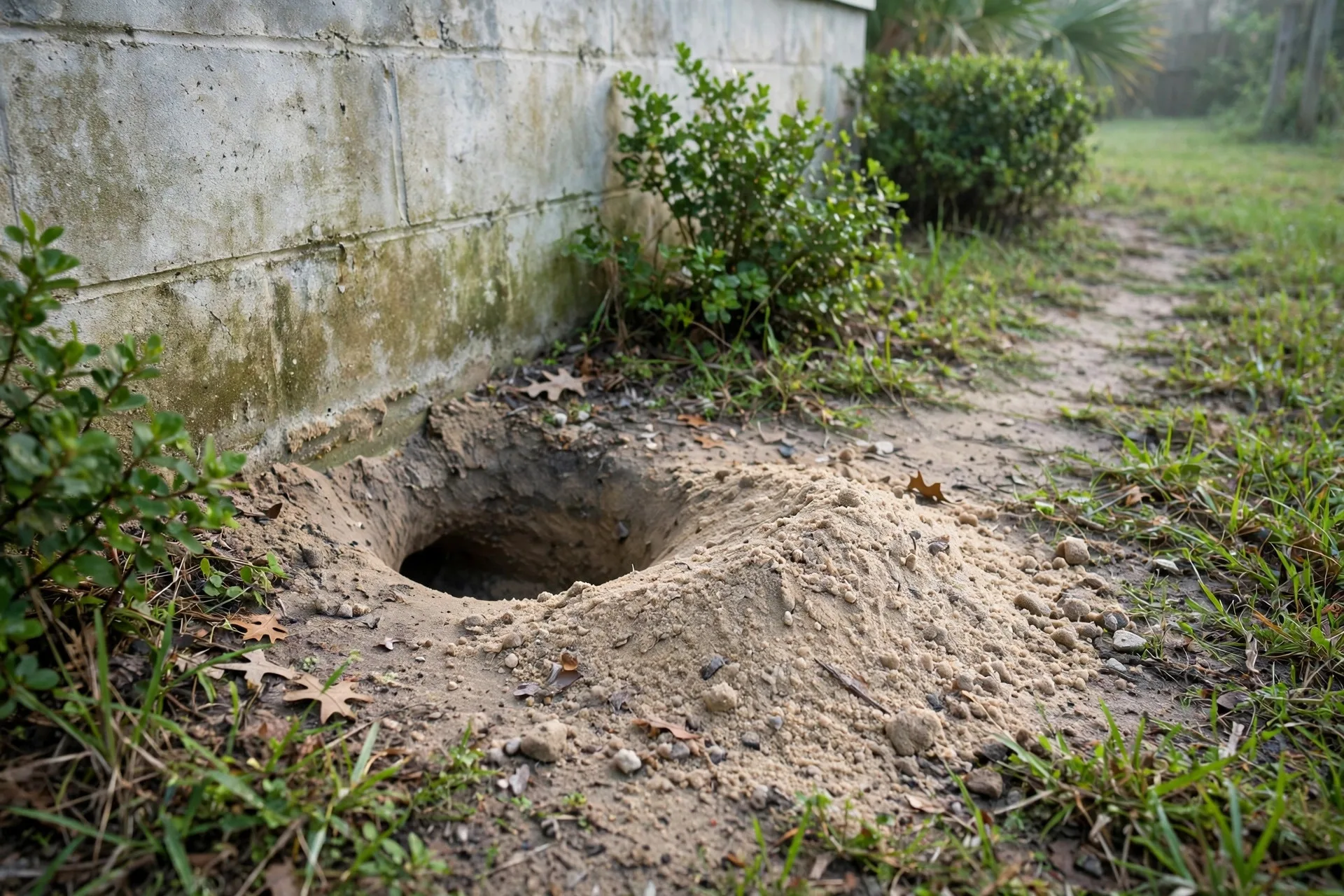
You walk out in the morning and the yard has changed. Fresh dirt sits fanned across the grass where no dirt was yesterday, and at the center of it is a clean round hole that was not there last week.
In Boynton Beach, that hole usually has one author. Norway rats dig burrows in our soft sandy soil all year round, under foundations, along fence lines, and beneath thick shrubs. One hole rarely stays one hole for long.
This guide shows you how to read a hole and tell a rat burrow from the digging of other Florida animals, how to test whether the burrow is still active, when burrows start to threaten the house itself, and the right order of steps that ends the problem instead of moving it indoors.
A Rat Burrow Gives Itself Away in Four Ways
Start with size and shape. A Norway rat entrance measures about 2 to 4 inches across. The rim looks smooth and packed down, worn by bodies passing in and out many times a night. A rough, freshly broken edge points to an animal that dug once and moved on.
Look next at the dirt. Rats kick soil out behind them as they dig, so an active entrance wears a fan of loose fresh dirt spread across the ground in front of it. Old holes collect leaves and turn dull. A bright fan of new soil means digging happened within the last few days.
Count the doors. A burrow system almost always has two or three entrances, and one of them is a hidden escape hole tucked under a shrub or a slab edge, with no dirt fan at all. Find one hole, then walk the whole line of cover before you decide what you are looking at.
Finish with traffic signs. Look for runways, the narrow worn paths rats press into grass and dirt between the burrow and food. Look for dark greasy rub marks where bodies brush a wall or a fence base, and for droppings near the entrance. Norway rat droppings are capsule shaped with blunt ends, about three quarters of an inch long. Our guide to rat droppings shows how to read them without handling them.
Not Every Hole in a Florida Yard Belongs to a Rat
South Florida soil gets dug by a whole crew, and the right response differs for each one.
Armadillos tear up lawns hunting grubs. Their work looks like shallow pits and torn turf scattered over a wide area, and their burrows run wider than a rat hole, with none of the neat packed rim.
Moles push up raised tunnels and small mounds of soil that look like tiny volcanoes. A mole mound has no open entrance at its center, because the mole travels below the surface and rarely comes out.
Voles and other small rodents leave holes closer to 1 or 2 inches wide, with no dirt fan and no runways leading away.
Washouts after heavy rain can open holes along a foundation where gutter water has carried the soil away. A washout looks rough and sunken, with no smooth rim and no traffic signs around it.
The rat burrow is the one with the smooth rim, the dirt fan, the second door, and the runway. Match all four before you act.
The Overnight Paper Test Tells You If the Burrow Is Still Active
An old burrow is just a hole. An active one is a home, and the difference decides everything you do next.
Loosely stuff the entrance with crumpled paper or a handful of loose dry soil. Do not pack it tight. Check the next morning, and again the morning after that.
If the plug is pushed out and the entrance stands open and clean, the burrow is active. Rats clear a blocked doorway within a night or two. If the plug stays in place for two to three days, and leaves or spider webs collect across the opening, the burrow is likely abandoned.
Run the test on every entrance you find, not just the obvious one. A system can sit quiet at the front door and stay busy at the back. While you test, watch for fresh droppings and new dirt, the two signs that never lie about activity.
Burrows Along the Foundation Put the House in Play
A burrow in the middle of the lawn is a yard problem. A burrow against the house is a house problem, for two reasons.
First, the digging itself. Burrow systems usually stay shallow, within about 18 inches of the surface, but along a foundation rats dig down and under the footing, and every tunnel carries soil out of the ground. Over a season, that soil loss can leave sections of slab and walkway with nothing solid beneath them, and cracks follow.
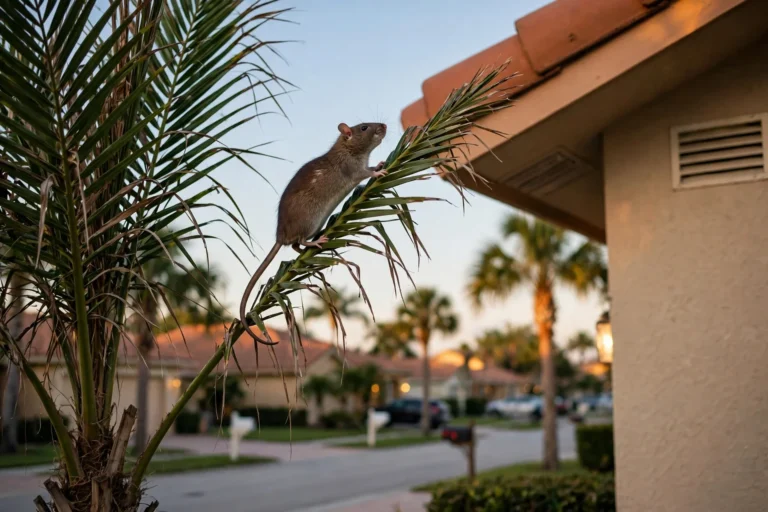
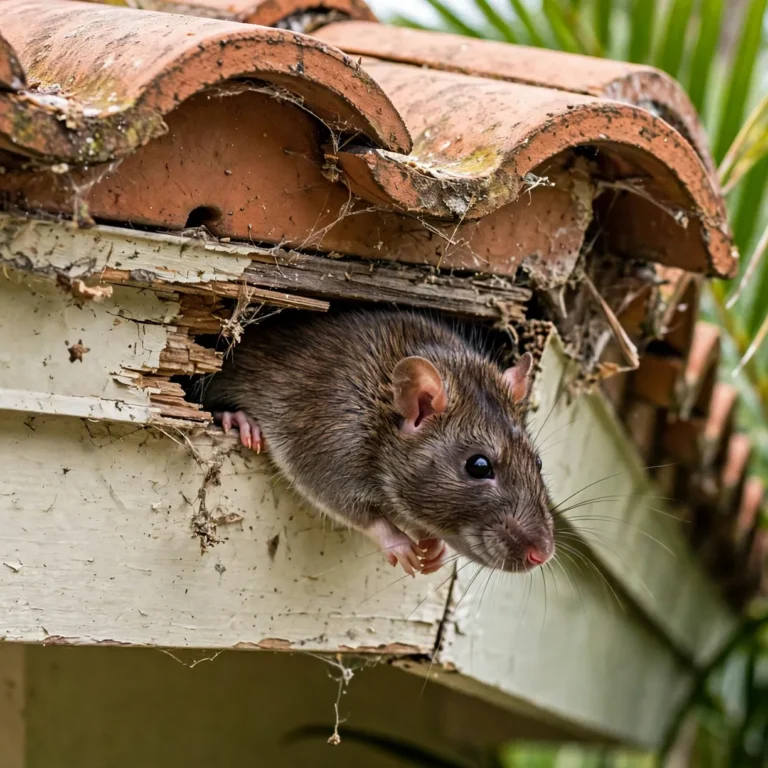
Second, the location. A burrow at the base of the wall puts rats right against every gap in that wall: pipe entries, cracks, vents, and weep holes. Rats that live against a house test those gaps nightly. The yard colony and the problem in our guide to rats in the walls often turn out to be one colony using two doors.
Treat any burrow within a few feet of the foundation as urgent, even before the paper test result comes back.
Rats Out in Daylight Mean the Colony Has Outgrown Its Cover
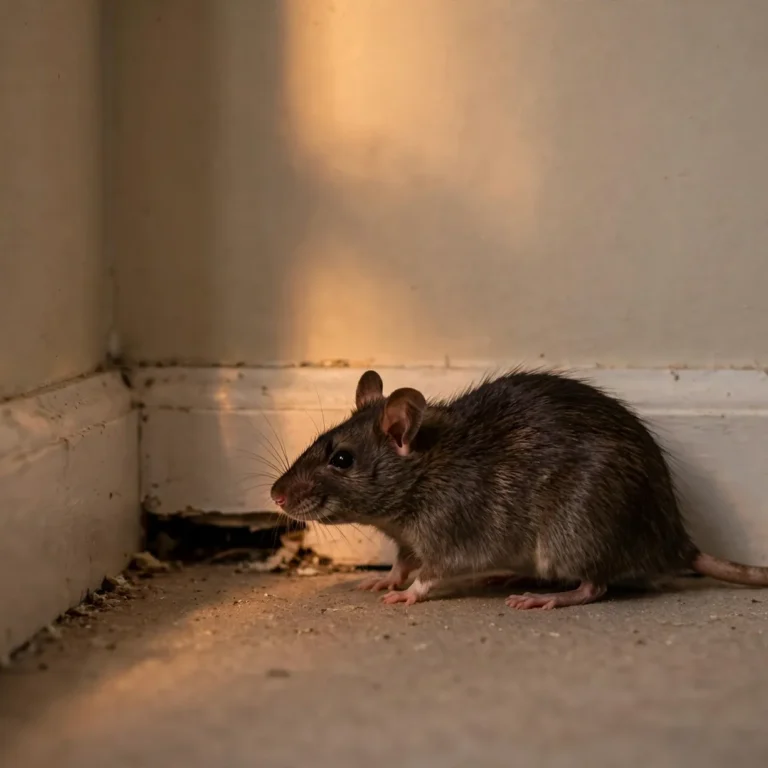
Norway rats work at night. A small young colony can live beside a home for weeks without a single sighting in the day.
When you start seeing rats in the yard in full daylight, the math has changed. The night food runs no longer feed everyone, so younger and weaker rats get pushed out to forage while the sun is up. Daylight rats almost always mean a large, settled colony, not one lost visitor passing through.
Daylight sightings plus active burrows is the combination that should end the waiting phase. The colony is established, it is growing, and it has lost its fear of your yard.
Fill a Burrow Too Soon and the Problem Moves Indoors
The instinct is to grab a shovel and close every hole. On an active burrow, that order of work backfires.
Fill or seal a system while the rats are still home and they do not vanish. They dig out along new lines, often straight toward the house, or they die inside the tunnels, and a dead rat under a slab trades a digging problem for a smell problem that lingers for weeks.
The order that works runs the other way. Confirm which burrows are active with the paper test. Remove the rats. Then close the ground: collapse the tunnels, pack the runs with gravel, and cap the entrances with hardware cloth set into the soil, so nothing digs back through the same soft spot.
Then take away the reasons to stay. Fallen citrus, pet food left outside, bird seed, and open compost are what pay a colony to settle in a yard. Trim thick ground cover back from the foundation and store firewood up off the ground. A yard with no food and no cover stops advertising itself to the next colony.
That full sequence, run on the whole property at once, is how a rodent inspection works at Rodent Shield in Boynton Beach. We map every entrance, including the hidden escape holes, remove the colony first, and only then close the ground and seal the wall gaps the burrows were feeding. If the colony has already moved inside, the same visit plans the rat removal work with it.
Questions Homeowners Ask About Rat Burrows
Q: Why are there new holes appearing in my yard?
A: Fresh holes with a fan of loose dirt are most often fresh digging by Norway rats, above all when the holes sit along a foundation, a fence line, or under thick shrubs. Rain washouts and armadillo digging also open holes in Florida yards, so check for the smooth rim, the second entrance, and the runways before you settle on rats.
Q: How can I tell if a rat burrow in my yard is still active?
A: Stuff the entrance loosely with crumpled paper or dry soil and check it for two to three mornings. An active burrow gets cleared open within a night or two, and its entrance stays clean, free of leaves and spider webs. A plug that stays put, with webs growing across the opening, points to an abandoned burrow.
Q: Can rats burrow under my foundation and damage it?
A: Yes. Burrows along a foundation can run down and under the footing, and the soil the rats carry out can leave slabs and walkways unsupported over time. The bigger risk is access: a colony living against the wall tests every pipe entry and crack, which is how yard rats become house rats.
Q: Why am I seeing rats in my yard during the day?
A: Rats prefer the night. Daylight activity usually means the colony has grown large enough that night feeding no longer feeds everyone, so some rats are pushed out to search in the day. Daylight rats plus active burrows is a sign of an established colony, not a passing visitor.
Q: Should I just fill the holes with dirt or concrete?
A: Not while the burrow is active. Filling first traps the problem in the ground, and the rats dig out along new lines, often toward the house. Confirm the activity, remove the rats, then collapse the tunnels and cap the entrances with gravel and hardware cloth.
Q: Will the rats leave on their own if I fill the burrows and wait?
A: Almost never. A burrow system with food nearby is a home, and rats answer a blocked door by digging a new one. Until the colony is removed and the food and cover are gone, new holes keep appearing, usually close to the old ones.
A new hole in the yard is a question, and now you know how to read the answer. Smooth rim, dirt fan, second door, runway: that is a rat burrow. The paper test tells you whether anyone still lives there, and the order of work, remove first and fill second, decides whether the story ends in the yard or moves into the walls.
If your Boynton Beach yard shows active burrows, above all near the foundation, book a rodent inspection with Rodent Shield. We will map every entrance, confirm which burrows are active, and lay out the removal and closing plan before any work begins.
Need Help With Rat Burrows in Your Yard in Boynton Beach?
Rodent Shield provides fast, professional rat removal and burrow closing in Boynton Beach. Call today for a free inspection and a clear plan to keep rats out for good.
Call 728 300-9010