
Rats in Your Walls? How to Get Them Out Safely in Boynton Beach
Wall Void Guide · Boynton Beach
Rats in Your Walls? How to Get Them Out Safely in Boynton Beach
You hear it after dark. A light scratching inside the wall beside your bed, or a quick run of tiny feet behind the kitchen cabinets. You check the rooms and find nothing. No rat in sight, no droppings on the floor, no chewed food in the pantry. Yet the sound comes back the next night, in the same spot.
That pattern is normal for rats in walls. A wall void is a perfect home for a rat: dark, warm, close to food and water, and almost impossible for you to see into. The animal can live, travel, and even nest inside the wall while your rooms look clean. This guide explains how rats get into your walls, the four mistakes that make the problem worse, and the exact steps that actually get them out in a Boynton Beach home.
Why rats in walls pick your home
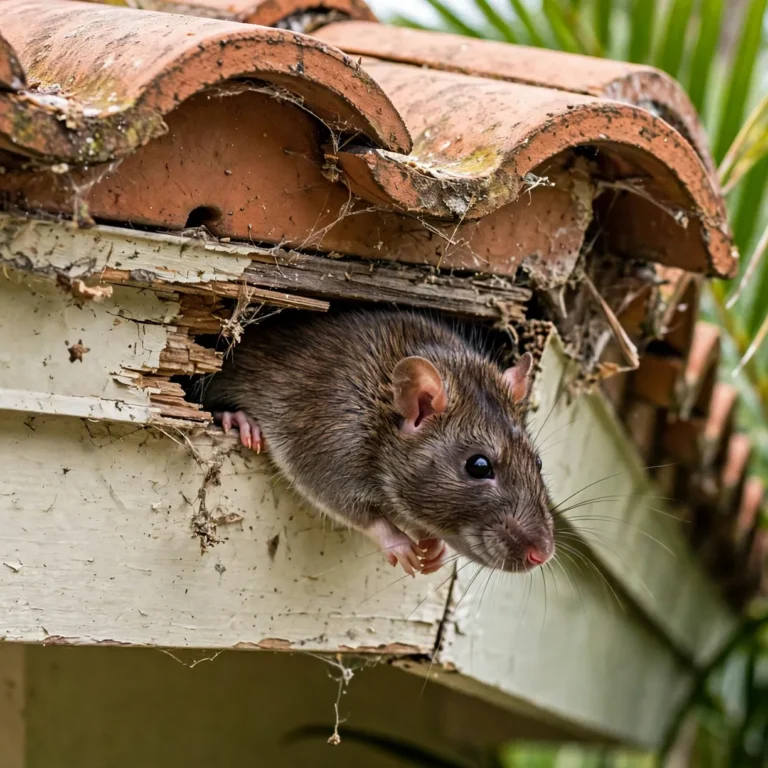
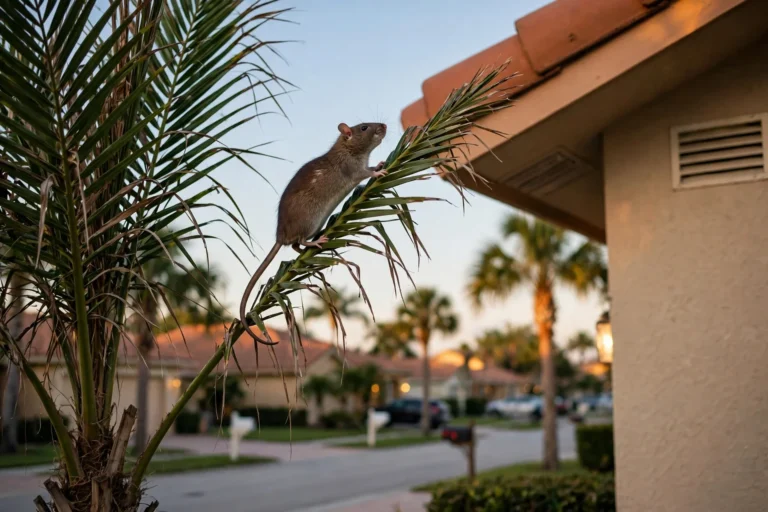
Roof rats are the rat most Boynton Beach homes deal with, and they love height. They climb palm trees, power lines, and fences, enter through the roofline, and then travel down through the gaps around pipes, wires, and vents. From the attic, a wall void is just the next hallway down. House mice use the same routes at ground level, slipping in through gaps around doors, pipes, and the air conditioning lines.
Once inside, rats do not need much. A wall void gives shelter from heat and predators, and it sits right next to the kitchen, the pantry, and the water pipes. Rats in walls follow the same routes every night, which is why you hear the sound in the same place again and again. They also leave scent trails along those routes, so even after one rat is gone, the next rat follows the same path into the same wall.
Read the signs before you act
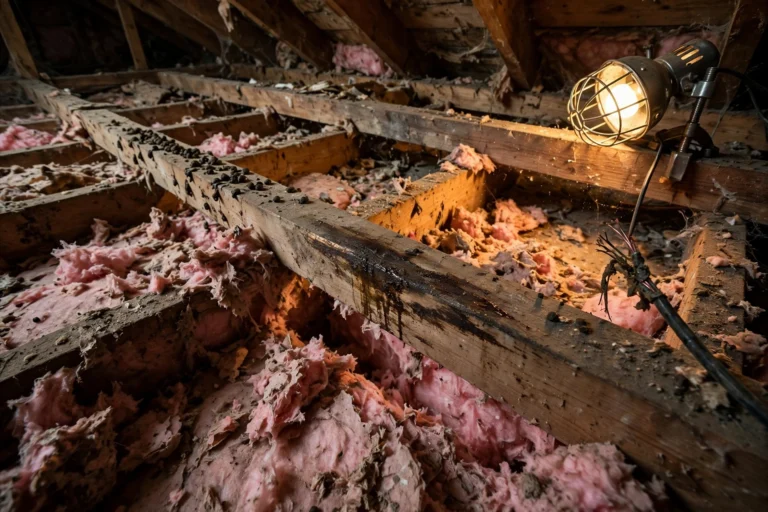
Sound alone cannot tell you everything, but the signs around the wall can. Look for droppings where the wall meets the floor, behind the refrigerator, behind the stove, and inside lower cabinets. Rat droppings are dark, about half an inch long, with pointed ends. Mouse droppings are much smaller, like grains of rice. Look for rub marks too, greasy dark smudges along baseboards and pipes where rat fur has brushed the same route many times.
A simple test helps you find where rats in walls come out. Lay a thin line of flour or talc on the floor near the wall where you hear the sound, and check it in the morning for tiny footprints. That tells you which exit they use, and that exit is where your traps belong. If you are not sure which animal you have at all, start with our guide to identifying the animal by its sound before you set anything.
Four mistakes that make a wall problem worse
Most wall problems get worse because of well meaning mistakes. Avoid all four of these.
First, never put poison inside the wall. A poisoned rat does not die where it eats. It retreats into the wall void to die, and then you get a smell that can last for weeks, plus flies, and sometimes a costly job to open the wall and remove the body. Our guide to a dead rat smell in the wall explains exactly how that smell builds and why it takes so long to go away.
Second, never seal the holes while rats are still active. Sealing an active hole traps the animal inside the wall. A trapped rat will chew a new exit hole, often into your living space, or it will die inside and smell. Always trap first, wait until the signs stop for about a week, and only then seal.
Third, do not cut open the wall to place a trap inside. There is no standard guidance that recommends traps inside a closed wall, and cutting drywall creates damage, dust, and a repair bill without solving the problem. Rats come out of the wall to feed every night. Trap them at the exits, behind appliances, in cabinets, and along the floor line, where they actually travel.
Fourth, do not count on ultrasonic devices or peppermint oil. University guidance says high frequency electronic devices are not effective against rats, and no study shows peppermint oil keeping rats out of a home. These products delay the real fix while the colony grows.
What to do tonight, step by step
You can start tonight without any special tools.
Note the time and the place. Write down when you hear the rats in walls and which wall it comes from. Nighttime activity points to rats or mice. Daytime scratching points more to squirrels or birds, which need a different approach.
Find the exits. Check behind the refrigerator, the stove, and the washing machine, inside lower cabinets, and along baseboards for droppings and rub marks. Lay the flour test near any spot you suspect.
Set snap traps at the exits. Place snap traps perpendicular to the wall, with the trigger facing the wall, so the rat steps onto it as it travels along its route. Bait with peanut butter, a small piece of dried fruit, or nesting cotton. Set several traps close together in the active area, and keep them where children and pets cannot reach them. Check them every morning.
Remove the food that keeps them coming. Store pantry food in sealed containers, pick up pet food at night, and fix any dripping pipe or tap. A rat that cannot feed in your home will travel further to your traps.
Be patient for a few nights. It can take a few days for rats in walls to trust a new trap, especially older rats that have learned to avoid them. Keep the traps set and keep checking the flour test until the signs stop completely.
The pro method for walls you cannot reach
Some wall voids cannot be reached at all, and that is where a professional method matters. One proven approach is the one way exclusion funnel, a device fixed over a known exit hole that lets rats leave the wall void to feed but blocks them from getting back in. Once the void reads quiet for several nights, the hole is sealed with steel mesh or metal, materials rats cannot chew through.
A professional can also use thermal cameras and inspection tools to trace routes through voids you cannot open, and can tell whether the activity runs through several parts of the house at once. If the signs continue after two weeks of trapping, or if you find chewed wiring anywhere, that is the point to stop doing it yourself and book a full rodent inspection.
After they are out, keep them out
Getting rats out of the walls is only half the job. The other half is closing the routes rats in walls used, or the next rats will follow the old scent trails straight back in.
Seal every entry with steel mesh, hardware cloth, metal flashing, or cement, never foam alone, which rats chew through in weeks. Pay special attention to the roofline, soffits, vents, and gaps around air conditioning lines and pipes, because those are the routes roof rats use most in Boynton Beach. Trim palm fronds and branches so nothing touches the roof, and check the roofline and soffits a few times a year. Our rodent proofing and exclusion service covers exactly this sealing work, with photo reports for each entry point.
When calling a professional is the right move
Call a professional if the activity runs through several rooms at once, if you find chewed wiring, if the signs continue after two weeks of trapping, or if the voids sit somewhere you cannot reach or clean safely. A full inspection confirms the species, maps every entry point, and gives you a plan that removes the rats, seals the routes, and cleans the contaminated areas in the right order. Hearing rats in your walls tonight? Book a rodent inspection and let us confirm what is living in there before it grows into damage. Call 728 300-9010.
Hearing rats in your walls tonight? Book a rodent inspection and let us confirm what is living in there before it grows into damage. Call 728 300-9010.
Schedule an InspectionFrequently Asked Questions
Can rats really live inside my walls?
Yes. Rats in walls are common in Boynton Beach homes: wall voids are one of the most common nesting places for roof rats, and house mice live in them too. Rats travel inside walls every night and come out through small exits to feed, which is why you can hear them clearly yet never see one in a room.
Should I put poison inside the wall?
No. A poisoned rat usually dies inside the wall void, and the smell can last for weeks. Trapping at the exits is safer, because you know exactly where the body is and you can remove it at once.
Can I seal the holes now and wait?
Not while rats are still active. Trap first, wait until droppings, sounds, and footprints stop for about a week, and only then seal the holes with steel mesh or metal. Sealing early traps rats inside to die or chew a new hole.
Should I cut open the wall to place a trap inside?
No. Cutting drywall causes damage without solving the problem, because rats leave the wall every night to feed. Place traps at the exits where they come out, behind appliances, in cabinets, and along the floor line.
Do ultrasonic devices or peppermint oil drive rats out of walls?
Do not count on either. University guidance says high frequency devices are not effective, and no study shows peppermint oil keeping rats out of a home. Trapping and sealing are what actually work.
How long does it take to get rats out of walls?
Small cases of rats in walls often clear within a week or two of steady trapping. Larger colonies, or activity running through several parts of the house, can take longer, and that is usually the point to bring in a professional.