
Will Rats Leave on Their Own? What Really Happens in a Boynton Beach Home
Will Rats Leave on Their Own?
Will Rats Leave on Their Own? What Really Happens in a Boynton Beach Home
You found the droppings, you heard the scratching, and then you did the sensible thing. You sealed the pantry, you took the pet food inside, and you waited. A week passed with no sound. Maybe the rats left on their own.
In Boynton Beach, that hope almost never comes true. A rat that has found a warm dry attic, a safe wall void, and water within a short walk does not pack up and move out because the kitchen got tidy. It finds new food, it waits out the quiet days, and it raises the next litter in the same nest.
This guide answers the five questions every homeowner asks at this point: will rats leave on their own, will they come back after removal, where do they hide in the day, how do you know they are really gone, and will they bite while you sleep.
No Food Does Not Mean No Rats
Taking food away is the right first move, and it is not enough on its own. Roof rats and Norway rats are opportunistic feeders, which means they eat what is close and switch fast when one source dries up.
Your kitchen was only one stop. In a Boynton Beach yard the next stops are everywhere. Fallen citrus and mangoes, bird seed, pet food left on a porch, open garbage, compost, and dog food in a garage all feed a colony. Water is even easier to find than food: a dripping hose bib, a pool, a bird bath, and the drip line from an air conditioner all give rats the water they need within a short walk of your roof.
A rat also needs very little food to stay. A few fallen oranges and a dish of water can hold a colony in place for weeks while the house looks clean inside. And while you wait, the colony keeps breeding. A small group that arrived in the spring can be a large settled colony by the fall, all living in the same attic and using the same entry points.
Food removal works only as one part of a full job. On its own it starves nothing. It moves the rats from the pantry to the yard, and then back into the attic when the yard food runs low.
A Quiet Week Does Not Mean the Rats Left
Rats go quiet for reasons that have nothing to do with leaving. A loud storm, a new cat in the neighborhood, a trap that caught one rat, or a change in the house routine can push a colony silent for days. They stay in the nest, they eat from stores, and they wait.
Noise is also a bad test on its own. Young rats are loud. Older rats learn the house. A colony that has lived in your attic for months knows when you go to bed and when you get up, and it does its loudest work in the dead hours of the night, when a sleeping house hears nothing. Our guide to what rats in the attic sound like shows how the sounds change as a colony settles in.
The only quiet that counts is quiet plus proof. No new droppings, no new gnaw marks, no fresh rub marks along pipes and beams, and no food touched in a test tray, all for two full weeks. One silent week is a pause. Two silent weeks with clean checks is the start of real evidence, and even then the entry points still need closing, or the next rat in the neighborhood simply moves into a ready made home.
Rats Remember the Way Back to Your House
Rats come back to the same house after being removed, and the reason is not stubbornness. It is memory, and it is scent.
A rat builds a mental map of its home. It learns every pipe, wire, beam, and gap that leads from the yard to the nest, and it remembers that map. Researchers put the usual home range of a brown rat at 25 to 100 feet from its nest, which is a short nightly walk. Reports of individual rats covering up to two miles to return to a known home show how strong that pull can be.
Scent does the rest of the work. As rats travel they leave scent trails made of urine, body oils, and pheromones. These trails work like marked paths, and they can linger for weeks or months after the rats that made them are gone. A new rat in the neighborhood follows a scent trail straight to your roofline, to the same gap, and into the same attic, because the trail tells it that the path is safe and that food and shelter wait at the end.
This is why removal without sealing and cleaning always fails in the same way. Catch the rats, leave the holes open and the scent trails in place, and the house sends out an open invitation to the next colony. The removal worked. The job was only half done.
The full job runs in order: remove the rats, clean the droppings and nesting material so the scent trails break, then seal every entry point with metal and mesh that rats can not chew through. That order is the difference between a house that stays empty and a house that fills up again in a month.
Where Rats Hide While You Are Awake
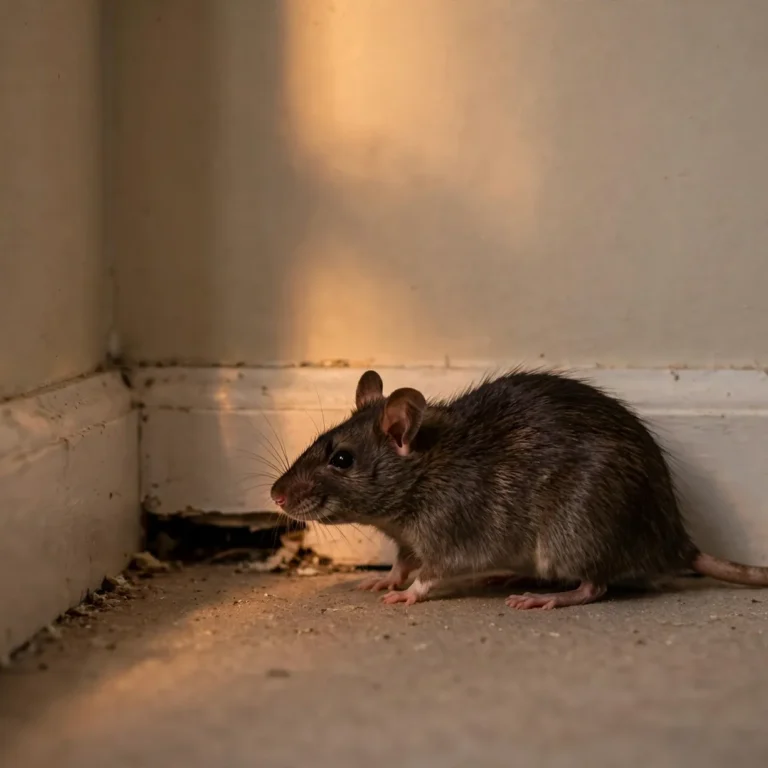
In the day, rats do not leave. They hide, and they are good at it. A roof rat spends the daylight hours in the highest quietest part of the house, and a Norway rat spends them at the lowest.
Start at the top. The attic is the first place to look: inside the insulation, behind stored boxes, along the eaves, and in the dark corners near the roof vents. Roof rats nest in soft dry material, so shredded insulation and torn paper make a perfect bed. Listen for the nest in the early evening, when the first rats wake and start to move.
Then check the walls. The voids between the studs give rats a warm hidden highway from the attic to the kitchen. Our guide to rats in the walls explains how the scratching and running sounds in a wall tell you the colony has moved down from the roof.
Then check the low quiet rooms. Behind the stove and the fridge, under the sink, inside the pantry, in the garage among stored boxes and firewood, and under a raised deck or shed, rats find dark corners that nobody opens for weeks. In a Florida home the garage is a common daytime hide, because it holds pet food, bird seed, and clutter in one place.
A rat in the day is almost never a rat that is lost. It is a rat that has found a hiding place it trusts. If you see one in daylight, the colony is already large enough that some rats must feed while the sun is up, which is the same sign that showed up in our guide to rat holes in your yard.
The Four Signs That Prove the Rats Are Really Gone
You do not prove rats are gone by waiting. You prove it by testing, and the test takes two weeks of clean results.
First, watch the droppings. Fresh droppings are dark and soft, and old ones turn grey and crumbly. Clean up every dropping you can reach, wearing a mask and gloves, and wet everything down first so no dust rises. Then check the same spots every morning. New droppings mean rats are still active. Our guide to rat droppings shows how to read them without handling them.
Second, listen for two weeks. Note every sound, every night, in a simple log. A house that is truly empty stays silent for fourteen nights in a row, not just for a quiet weekend.
Third, set a test that can not lie. Place a small tray of flour or unscented talc along a beam or a pipe run in the attic, and set two snap traps that are baited but unset, so they work as a sensor and not as a killer. Check them daily. Footprints in the flour or a moved trap mean a rat is still travelling that path.
Fourth, look for new damage. Fresh gnaw marks are pale and clean. Old gnaw marks turn dark. New rub marks along a beam are dark and greasy. If nothing new appears for two weeks, and the traps and the flour stay untouched, the house is empty.
Then do the part most people skip. Seal the entry points and clean the attic before you call the job done. An empty house with open holes is an empty house for about a week.
A Bite in the Night Is Rare, and That Is the Wrong Thing to Wait For
Rats bite people, and the honest picture is calmer than the fear and more serious than a joke.
Wild rat bites are relatively rare. In a survey of 1,363 people in Baltimore, nearly two thirds had seen rats in the streets, only 6 percent had seen rats inside a home, and only 1.2 percent had ever had a rodent bite in their life. Most bites happen at night while the person is asleep, and most of the people treated for rat bites are children. The bites usually land on exposed skin, the hands, the fingers, and the face. Most bites are not severe, and the infection rate is about 2 percent. Rat bite fever is very rare, and rats are not a rabies risk in the United States.
The pattern matters more than the number. Bites happen in homes with an active infestation, where rats have harborage close to where people sleep and have grown used to human presence. A single rat seen once in a garage is not that risk. A colony living in the wall beside a bedroom, night after night, is.
So the bite is not the reason to act fast. The damage is. While you wait to see if a bite ever happens, the colony chews wires, fouls insulation, and spreads droppings through the attic. Treat the infestation because it is in your house, not because of the one rare thing it might do.
If a bite does happen, wash the wound at once with soap and water, and call a doctor the same day, above all if the person bitten is a child or if fever or swelling follows in the next three weeks.
The Order of Work That Ends It for Good
Waiting is not a plan. Trapping alone is not a plan either. The order below is the plan, and it works because each step removes one reason the rats stay.
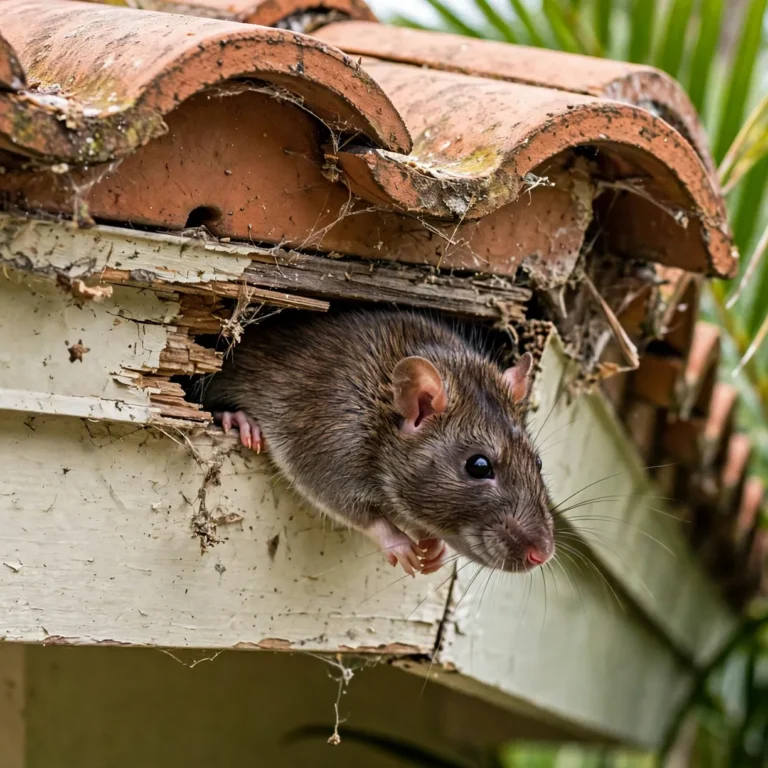
First, find how they get in. Walk the roofline, the vents, the pipe entries, and the AC lines. A rat needs a gap about the size of a quarter. Mark every gap you find, and check the yard for the burrows and runways that feed them.
Second, remove the rats that live inside. Trap along the dark edges and pipes where they travel, check the traps every day, and keep trapping until the tests in the section above stay clean for two weeks.
Third, clean the attic. Remove the droppings and the nesting material, wearing a mask and gloves, and wet everything down first. Cleaning breaks the scent trails that would guide the next colony home.
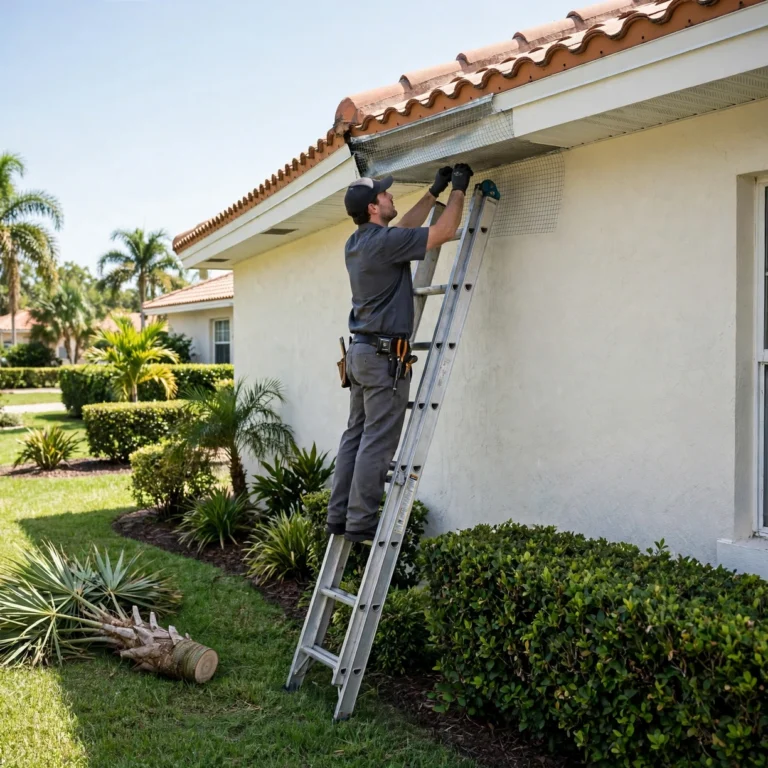
Fourth, seal the house. Cover vents with strong wire mesh and close gaps with metal flashing or copper mesh, never foam alone, because rats chew through foam. Seal while you are sure the attic is empty, never before.
Fifth, take away the reasons to return. Fallen fruit, pet food outside, bird seed, and open garbage all pay a colony to settle. Trim branches and palm fronds back from the roofline so no bridge leads onto the roof.
That full sequence, run on the whole property at once, is how a rodent inspection works at Rodent Shield in Boynton Beach. We map every entrance, confirm which signs are still active, remove the colony first, and only then close the ground and seal the wall gaps. If the colony has already moved inside, the same visit plans the rat removal work with it.
Questions Homeowners Ask About Rats Leaving
Q: Will rats leave on their own if there is no food?
A: Almost never. Rats switch food sources fast, and a Boynton Beach yard offers fallen fruit, bird seed, pet food, garbage, and water within a short walk of the roof. Taking food away moves the rats from the pantry to the yard, not out of the house. They leave only when the colony is removed, the scent trails are cleaned, and every entry point is sealed.
Q: Do rats come back to the same house after being removed?
A: Yes, if the house is left open and the scent is left in place. Rats remember the routes into a home, and the pheromone trails they leave can linger for weeks or months and guide new rats to the same gaps. Removal holds only when sealing and cleaning follow it, in that order.
Q: Where do rats hide inside the house during the day?
A: Roof rats hide high, in the attic insulation, behind stored boxes, and along the eaves. Norway rats hide low, in wall voids, behind the stove and fridge, under sinks, in the pantry, and in garage clutter. Both kinds stay out of sight in the day and do their loudest work at night.
Q: How do I know when the rats are really gone?
A: Test for two weeks. Clean up all droppings and check for new ones every morning, log the sounds every night, set a flour tray and baited but unset traps as sensors, and look for fresh gnaw marks and rub marks. Two full weeks with no new signs means the house is empty. Then seal the entry points before you call the job done.
Q: Will rats bite people or pets while they sleep?
A: Bites are rare, and they happen most often at night while the person sleeps, above all to children, on exposed hands, fingers, and the face. Most bites are not severe, infection is about 2 percent, and rat bite fever is very rare. The risk concentrates in homes with an active infestation close to sleeping rooms. Pets are larger and less likely to be bitten than a sleeping child, but a pet that corners a rat can still be bitten. Any bite should be washed at once and shown to a doctor the same day.
Rats do not leave on their own. They stay because your house gives them warmth, safety, water, and food within a short walk, and they come back because they remember the way and can smell the path. The question is never whether they will get bored and go. The question is whether you will close the doors they use and break the trails they follow.
If your Boynton Beach home has gone quiet for a week and you are not sure the rats are gone, do not trust the quiet. Run the two week test, check the droppings and the flour tray, and look for fresh gnaw marks. If any sign is still fresh, book a rodent inspection with Rodent Shield. We will map every entrance, confirm whether the colony is still active, and lay out the removal and sealing plan before any work begins.
Need Help With Rats in Your Boynton Beach Home?
Rodent Shield provides fast, professional rat removal and exclusion in Boynton Beach. Call today for a free inspection and a clear plan to keep rats out for good.
Call 728 300-9010