
If You See One Rat, How Many Are Really in Your House?
How Many Rats? · Boynton Beach
If You See One Rat, How Many Are Really in Your House?
It takes less than a second. A shape darts along the garage wall, a tail slips behind the water heater, and then the house is quiet again.
You saw one rat. Just one. But the question that follows you to bed that night is the one every homeowner asks: how many rats are in my house?
Most people do the same three things next. They search the question online at midnight, they set a single trap where the rat appeared, and they hope the quiet house the next night means it is over. Sometimes it is. Often the quiet only means the rats went back to the routes you cannot see.
This guide gives you the honest answer about how many rats are in my house. You will learn how fast rats actually multiply, the signs that reveal the real number hiding in your home, and how to tell a lone visitor apart from a settled colony.
One Sighting Rarely Means One Rat
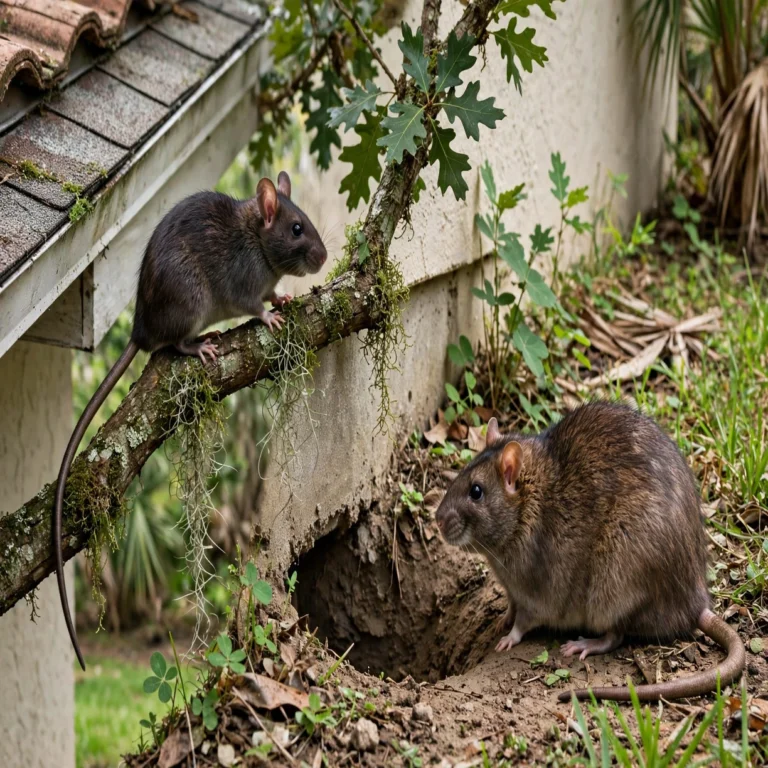
Rats are social animals. In the wild they live in colonies, and a house gives a colony everything it wants: shelter, water, and a steady supply of food scraps.
A single rat on its own is usually young. Young rats leave the nest to look for new territory, and one of those scouts is often the first rat a homeowner ever sees.
But here is the part most people miss. Rats are also nocturnal and shy. For every rat bold enough to cross an open floor while you are watching, others are moving through the attic, the wall voids, and the roofline where you never look.
Pest professionals have a simple rule for this. The rat you see is the one that made a mistake. The colony it belongs to stays hidden.
The Breeding Math Is Faster Than You Think
This is where one rat stops sounding like a small problem.
A female rat carries her young for about 21 to 23 days. A roof rat litter usually holds about 6 to 8 babies, and a healthy female can raise 4 to 6 litters in a single year.
Those babies grow up fast. Within a few months the young rats are old enough to breed themselves, and their litters start stacking on top of the first one.
Run the numbers and the answer to how many rats are in my house changes fast. One pregnant female in spring can be the start of dozens of rats by late summer. Left alone for a full year, with food and shelter close by, the family line from a single pair can climb into the hundreds.
Boynton Beach makes the math worse, not better. Roof rats breed all year in South Florida because the weather never turns cold enough to slow them down. There is no winter pause button here.
A colony also needs very little to settle in. A bowl of pet food left out at night, fruit fallen from a backyard tree, a bird feeder over the patio, and a leaky pipe for water will keep rats fed within a few steps of their nest. Boynton Beach yards offer all four in most months of the year, which is why colonies here grow without ever needing to travel far.
So the honest answer to how many rats are in my house is this. One rat today does not stay one rat for long, and the clock is already running.
Signs That Reveal the Real Number
You cannot count rats by watching for them. You count them by reading what they leave behind, and the pattern of the signs tells you whether you have a scout, a small family, or a full colony. Reading those signs is how you estimate how many rats are in your house without ever seeing the whole group.
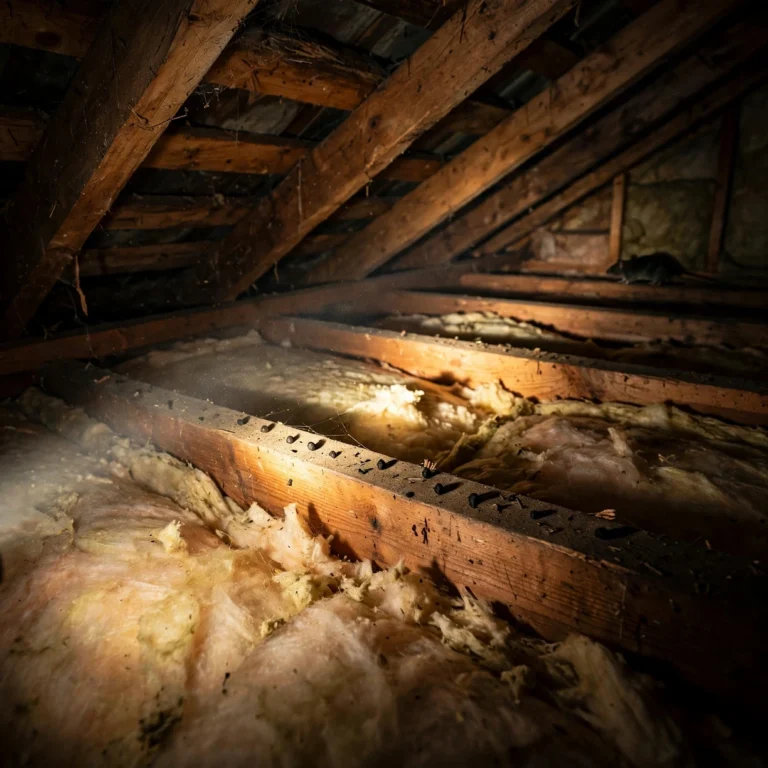
Listen at night. Scratching, light running, or soft thumps above the ceiling after dark point to rats moving through the attic. If the noise comes from several spots on different nights, more than one animal is at home up there. Our guide to “what rats in the attic sound like” helps you separate rat sounds from squirrels and raccoons.
Count the droppings. A few pellets in one corner can mean a single visitor passed through. Piles of droppings in the attic, near pet food, and along garage walls mean regular traffic, and regular traffic means a group, which tells you a lot about how many rats are in my house. Fresh droppings are dark and soft. Old ones turn dry and grey.
Look for grease marks. Rats run the same route so often that the oil in their fur rubs dark smears onto beams, pipes, and the edges of holes. One marked route is a path. Several marked routes are a road system, and road systems belong to colonies.
Look for chewing and shredding. Rats gnaw on wood, plastic pipes, and stored boxes to keep their teeth down, and fresh pale chew marks mean the work is recent. Shredded insulation, paper, or fabric gathered into a loose ball is nesting material, and a nest means young rats are already on the way or already born.
Check how many doors they use. Rats slip in through gaps at the roofline, vents, and pipe openings, and a colony usually keeps more than one way in and out. Our guide to “how small a hole a rat can fit through” shows you the gap sizes worth sealing.
Lone Scout or Settled Colony? Read the Pattern
Sometimes the answer to how many rats are in my house really is just one rat. A young scout can wander in through an open garage door, find nothing worth staying for, and be gone the same week.
The pattern tells you which story you are living. One sighting, no droppings, no night sounds, and no marks usually means a visitor. You may never see it again.
A colony writes a different pattern. Droppings keep appearing after you clean. Sounds return night after night. You spot a second rat, or the first one appears in daylight, which rats avoid unless the hidden spaces are crowded.
Daylight sightings deserve special attention. A rat that feels safe enough, or crowded enough, to move around in the open is rarely living alone.
If you want a simple home test, run it for two weeks. Clean up every dropping you can find, note the spots in your phone, and check the same spots every few days. Take a photo of any grease mark so you can see if it grows darker. Then listen for three nights in a row and write down where the sounds come from. Fresh droppings in new spots, returning sounds, and darker marks mean the pattern is growing. Nothing new for two full weeks is the closest thing to proof that your visitor really was alone.
When the pattern points to a colony, guessing how many rats are in my house stops being useful. The number you cannot see is the number that decides what to do next.
Why Guessing Wrong Gets Expensive
Treat a colony like a single rat and the problem quietly grows. One trap catches one animal while the breeding continues above your ceiling, and a few months later the sounds are louder than before.
Wait too long and the damage list grows with the population. Rats chew wiring, shred attic insulation for nesting, and leave droppings and urine in the insulation your air moves through.
There is a second trap to avoid. Sealing every hole the moment you see a rat can lock the colony inside, and rats trapped in walls die there or chew their way deeper in. Our article on “rats in your walls” explains why the order of the work matters so much.
The cheap moment to act is while the colony is still small. That moment is measured in weeks, not months.
How a Professional Count Actually Works
Nobody can give you an exact headcount of animals that hide for a living. What a good “rodent inspection” does is read the full pattern at once: droppings in every zone, grease marks on the routes, nesting spots in the insulation, and every entry point on the roofline.
Put together, those signs separate a passing scout from a breeding colony with real confidence, and they give a much clearer answer to how many rats are in my house. The plan then matches the problem, from targeted removal for a small family to full exclusion work for a settled colony.
You also get the evidence in your hands. A proper visit ends with the entry points identified, the active routes named, and a clear read on whether you are facing a scout, a small family, or a breeding colony. That read is what a real quote is built on.
That is how Rodent Shield works in Boynton Beach. We show you what we found, explain what it means in plain words, and only then talk about the fix. No scare tactics, and no guessing dressed up as a quote.
Questions Homeowners Ask About One Rat
Does seeing one rat always mean there are more?
Not always. A single young rat can wander in alone while looking for new territory. But rats live in colonies and hide well, so one sighting should always start a sign check. Droppings, night sounds, and grease marks will tell you within days whether that rat was alone, and they give you a first estimate of how many rats are in your house.
How many babies does a rat have at once?
A roof rat litter usually holds about 6 to 8 babies, and a female can raise 4 to 6 litters a year. The young grow fast and can start breeding within a few months, which is why the numbers climb so quickly.
How can I tell if it is one rat or a colony?
Read the pattern, not the sighting. One visit leaves almost nothing behind. A colony leaves fresh droppings in several places, sounds on most nights, dark grease marks along its routes, and often more than one entry point around the roofline, all of which help answer how many rats are in my house.
Can one rat really turn into a big problem?
Yes, if that rat is female or finds a mate inside. The breeding math is fast, and in South Florida it runs all year. One rat in spring can be a colony by the end of summer if food and shelter are easy to reach.
When should I call a professional about rats?
Call when the signs repeat: fresh droppings after cleaning, sounds on several nights, a daylight sighting, or droppings in more than one part of the house. Those signs mean the hidden number is bigger than the one you saw, and an inspection will pin it down.
One rat is not a verdict. It is a question, and the signs in your attic, walls, and roofline hold the answer to how many rats are in my house.
Read them early and a small visit stays small. Ignore them and the breeding math decides for you.
If you want the real number for your home, book a rodent inspection with Rodent Shield in Boynton Beach, FL. We will read the signs, show you the entry points, and tell you honestly how many rats are in your house, whether it is one rat or the whole family.
Want the real number for your home? Book a rodent inspection and let us read the signs, show you the entry points, and tell you honestly how many rats are in your house. Call 728 300-9010.
Schedule an Inspection