What Do Rats in the Attic Sound Like?
Identification Guide · Boynton Beach
What Do Rats in the Attic Sound Like?
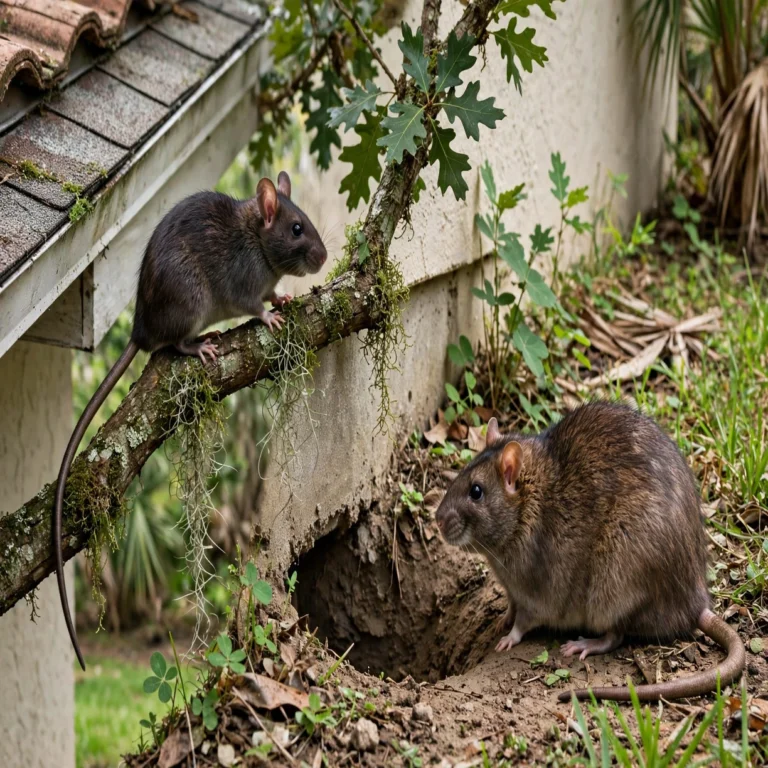
You are in bed, the house is quiet, and then it starts. A light scratching over the ceiling. A quick run of tiny feet. A slow chewing sound that stops the moment you sit up. If you live in Boynton Beach, there is a strong chance roof rats are moving through your attic while you listen.
Sound is usually the first sign of a rat problem. Roof rats are nocturnal and secretive, and they are rarely seen in the open, so most homeowners hear them long before they find droppings or gnaw marks. This guide walks you through each sound a rat makes, what that sound means, how to tell rats apart from squirrels, mice and raccoons, and the exact steps to take tonight. Not sure it is a rat? Identify the animal first: What’s Scratching in Attic at Night?
The short answer for worried ears
Rats in the attic sound like light and fast scratching, quick scurrying across the ceiling, steady gnawing on wood or plastic, soft rustling in insulation, and at times faint squeaking. The noises start after dark, grow quieter when you move around, and return once the house settles. If the same sounds repeat in the same place on two or three nights in a row, something is living up there, and it is time to confirm it with signs and an inspection.
Learn the five sounds rats make in an attic
Scratching is the sound almost every homeowner reports first. It is light, fast and uneven, like fingernails tapping and dragging on cardboard. Rats scratch as their claws grip wood, drywall and insulation while they climb and dig. Scratching that travels up or down inside a wall points to a rat moving through the wall voids, a route roof rats use every night.
Scurrying is the quick pitter patter of feet across the ceiling or along a rafter. It comes in short runs. A rat dashes a few feet, stops, listens, then dashes again. One rat can sound like several, because it covers the same route again and again on its way to food and water.
Gnawing is a slow, rough crunching or grinding sound, and it is the one sound you should never ignore. The front teeth of a rat grow for its whole life, so rats chew every day to keep them short. In an attic they chew wood, plastic pipes, storage boxes and, sadly, electrical wiring. Bare wire left behind by gnawing is a known fire risk, so steady chewing in one spot deserves fast action.
Rustling is a soft crinkling and shifting sound. It comes from rats pushing through insulation, paper and stored items while they build or repair a nest. Rustling that stays in one corner night after night usually marks the nest site itself.
Squeaking and chirping are the voices of rats, and you will hear them less often than the movement sounds. Most rat talk is ultrasonic, far above what the human ear can catch. The squeaks people do hear tend to come from young rats calling for their mother, or from rats fighting over food or space. A soft clicking or chattering, called bruxing, is made by a rat grinding its teeth while it sits still.
Night hours give the sound away
Timing is the fastest clue you own. Roof rats wake at sunset and stay active through the night, with busy spells just after dark and again before dawn. A noise at 2 in the morning fits rats. The same noise at 2 in the afternoon almost never does, because that is squirrel time.
Many homeowners ask why the attic goes silent the moment they climb up to look. Rats freeze and hide when they sense movement or light. Silence during your visit does not mean the attic is empty. It means the rats heard you first. A sound that returns night after night matters far more than one quiet look in the attic.
The season plays a part in South Florida too. Heavy rain and storms push roof rats to hunt for dry shelter. The citrus season, from fall into spring, puts ripe fruit in yards all over Palm Beach County, which draws rats toward homes with palm trees and fruit trees.
Where the sound travels inside your home
A sound over the bedroom ceiling means the animal is walking on top of the ceiling, in the open attic. A sound inside a wall, moving up and down, means a smaller animal is using the wall void as a ladder, and that pattern fits rats and mice far better than it fits a raccoon. Sounds near pipes, vents and the air conditioning lines are common, because rats follow those routes through the house. If the noise seems louder when the air conditioning runs, rats may be travelling along the ducts, and their waste can be pulled into the air you breathe, so that pattern is worth a prompt inspection.
Match the sound to the animal
The rat. Light scratching, scurrying and gnawing, heard after dark and before dawn, overhead and inside walls. Droppings are dark, about half an inch long, with pointed ends.
The mouse. Much lighter and quicker sounds, faint scratching and tiny fast steps. House mice also squeak more than rats do. Droppings are small, like grains of rice. A mouse is a smaller problem that still needs sealing and removal, because mice breed fast.
The squirrel. Loud running, thumping and rolling sounds in the daytime, strongest near sunrise and again in the afternoon. Squirrels drag in leaves and twigs, and they often sound like something is rolling across the ceiling. Daytime noise is the giveaway.
The raccoon. Heavy, slow thumps you can feel through the ceiling, plus dragging sounds and at times chattering or growling. A raccoon sounds like a small person walking up there. This is a bigger animal and a bigger job, and it should never be handled without a professional.
The bat. High chirping and squeaking with fluttering, and no footsteps at all. The sounds build near dusk around one spot, often a gable end. Bats are protected in Florida, so a bat sound means call a professional, never seal it yourself.
Sounds that mean you should act fast
Some sounds can wait for a morning inspection. Three patterns cannot.
- Gnawing in one spot for long spells. That can mean a rat is working on wiring or on a pipe. Chewed electrical wiring is a fire risk, and a chewed water line can leak into the ceiling.
- Frantic scratching in one place inside a wall. An animal that fell into a wall void and cannot climb out will scratch hard in a single spot, and the sound grows weaker over a day or two. That animal is on a clock.
- Thin, high cries that repeat. Young rats and other baby animals call when the mother is out feeding. Babies in the attic change the whole removal plan, because sealing an entry with young inside leads to dead animals, odor, and a mother tearing a new hole to reach them.
Do these five things tonight
- Note the time and the room. Write down when the sound starts, where it is strongest, and whether it sits overhead or inside a wall. Time, weight and place are the three facts an inspector needs most.
- Record the sound on your phone. A short recording helps a professional name the animal before anyone visits. Play it back and compare it with the sounds in this guide.
- Listen for the pattern. A travelling animal makes short runs along one edge at the same times each night. A nesting animal moves across a wider area at odd hours, with rustling in between.
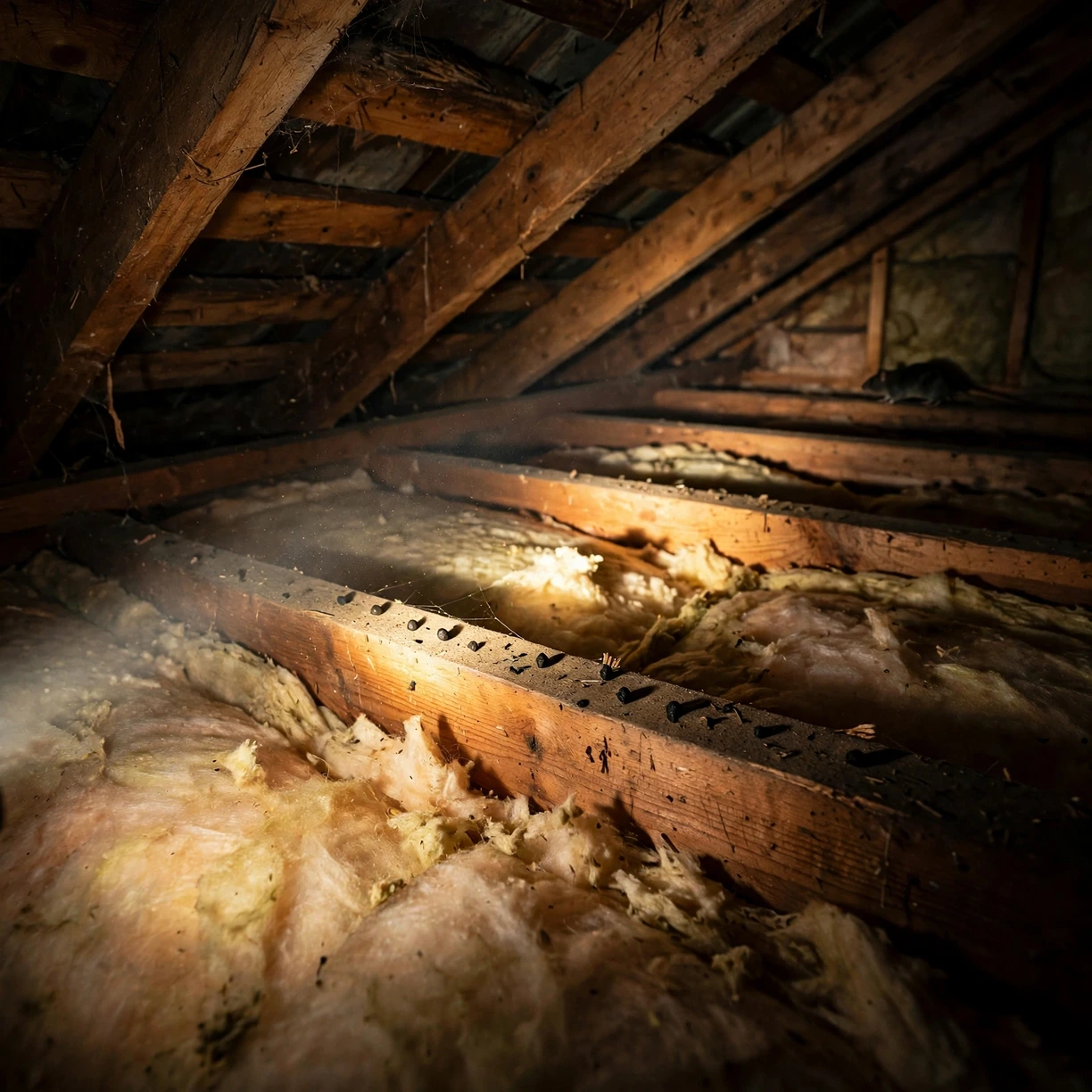
- Peek from the attic hatch, do not walk in. From the doorway, a torch beam can show droppings, tunnels in the insulation or a nest. Do not touch droppings, and do not sweep them up dry. CDC guidance is clear that dry sweeping can push contaminated dust into the air.
- Leave poison and sealing for later. Do not put rat poison down tonight, and do not block holes yet. A poisoned rat dies inside a wall and turns a noise problem into a smell problem, and a sealed hole with rats still inside does exactly the same.
Signs that prove rats are the source
Sound is a strong clue, but signs settle the question. In a rat attic you will find some mix of dark pointed droppings along the routes rats travel, rub marks where the oil in rat fur smears beams and pipes, gnaw marks on wood, boxes and food packaging, and a nest of shredded insulation, paper or cloth tucked into a corner. A stale, musky smell of urine often hangs in the air as well. If contaminated insulation needs to be removed and replaced, that work is covered by an Attic Cleanup service. If you find these signs, the next step is a full Rodent Inspection so the species, the entry points and the size of the problem are confirmed before removal begins.
When it is time to call for help
Call a professional when the sounds repeat for more than two or three nights, when you hear gnawing, when droppings appear, or when any of the act fast patterns show up. A good inspection covers the attic, the roofline, the soffits and every gap around pipes and lines. Removing the rats is only half of the fix, because open entry points invite the next family in. Ask for a plan that removes the rats, seals every entry point with materials rats cannot chew through, and cleans the contaminated areas safely. That sealing work is what a Rodent Proofing and Exclusion service covers. If the signs point to roof rats, a dedicated Roof Rats removal plan fits better than general pest control.
Hearing noises tonight? Book a Rodent Inspection and let us confirm what is up there before it grows into damage. Call 728 300-9010.
Frequently Asked Questions
How can I tell if the noise in my attic is rats or squirrels?
Check the clock first. Rats own the night hours, with scratching and scurrying after dark and before dawn. Squirrels own the day, with running and rolling sounds near sunrise and in the afternoon. Then check the signs. Rat droppings are dark and pointed, about half an inch long. Squirrel droppings are blunter and fewer, and squirrels drag leaves and twigs into the attic.
Can you hear rats in the attic during the day?
At times, yes. A rat that is disturbed, hungry or caring for young may move in daylight. Daytime sound on its own does not rule rats out, but loud running and thumping through the whole day points far more to squirrels. Timing is a clue, never a verdict, so let the signs confirm it.
How many rats are in my attic if I hear noises every night?
Sound cannot give you a count. One rat walking the same nightly route can sound like a crowd, and a group of rats can sit silent for hours. An inspector counts rats by their signs, like the amount and spread of droppings, the number of entry points in use and the size of the nesting area.
Will rats in the attic leave on their own?
Do not count on it. An attic gives rats shelter, warmth and a safe place to raise young, and yards in Boynton Beach give them fruit, pet food and water. While an entry point stays open, new rats also follow the scent trails left by the old ones. Removal plus sealing is what ends the cycle.
Why do the noises stop when I go into the attic?
Rats hear and smell you long before you see them. Their eyesight is poor, but their hearing is sharp, so your footsteps, your voice and your torch tell them to freeze and hide. A quiet attic during your visit is normal rat behaviour, not proof that the attic is empty.
About Us
Rodent Shield Boynton Beach is a local team specializing in rat removal, mice control, rodent exclusion, attic cleanup, and crawl space services across the Boynton Beach area. We use targeted, pet-friendly methods and tailor every plan to the neighborhood and home we are working in.
Our Address
Rodent Shield Boynton Beach
3050 SW 14th Pl
Boynton Beach, FL 33426
📞 728 300-9010
✉ hello@rodentcontrolboyntonbeach.com
Monday to Saturday, 8am–8pm
© 2026 rodentcontrolboyntonbeach.com. All rights reserved.
Licensed & Insured · Serving Boynton Beach & Palm Beach County