
Rodent Inspection · Boynton Beach, FL · Palm Beach County
Rodent Inspection in Boynton Beach —What We Check
A rodent inspection is the single most consequential 45 minutes in the entire rodent control process — everything that follows depends on what a technician finds and correctly identifies. Here’s exactly what a professional inspection covers, what tools are actually used, and how to tell a thorough inspection from a rushed one.
★★★★★ 100+ Reviews · FDACS Chapter 482 Licensed · Same/Next-Day Boynton Beach
What a Rodent home Inspection Actually Involves
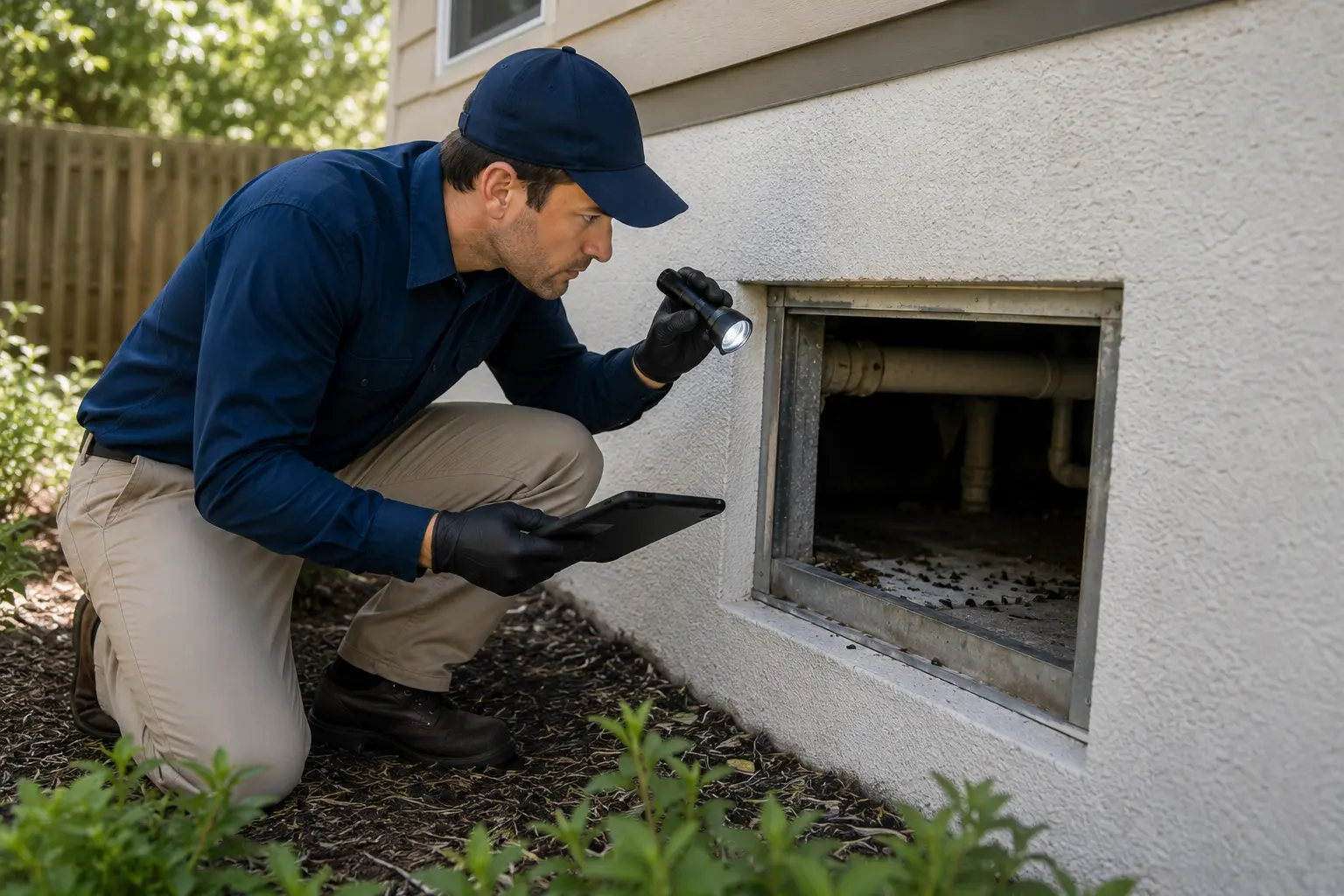
A proper inspection is a systematic walk-through of every zone a rodent could realistically use to enter, travel through, or nest in — not a quick glance in the attic and a verbal guess.
🏠 Attic & Roofline
Rafters, insulation surface, soffit intersections, and ridge vents checked for droppings, grease marks, and storm-lifted entry gaps.
🧱 Foundation & Perimeter
Full walk around the foundation line checking for burrow holes and gaps at the sill plate or slab seams.
🔧 Soffits & Utility Penetrations
Every pipe, cable, dryer vent, and AC line-set penetration checked individually rather than assumed sealed.
🚗 Garage & Storage
Common secondary nesting zone, particularly for house mice, due to stored boxes providing cover and nesting material.
🌴 Landscaping Proximity
Palm fronds, tree branches touching the roofline, dense shrubbery, and fallen citrus fruit noted as access routes or food sources.
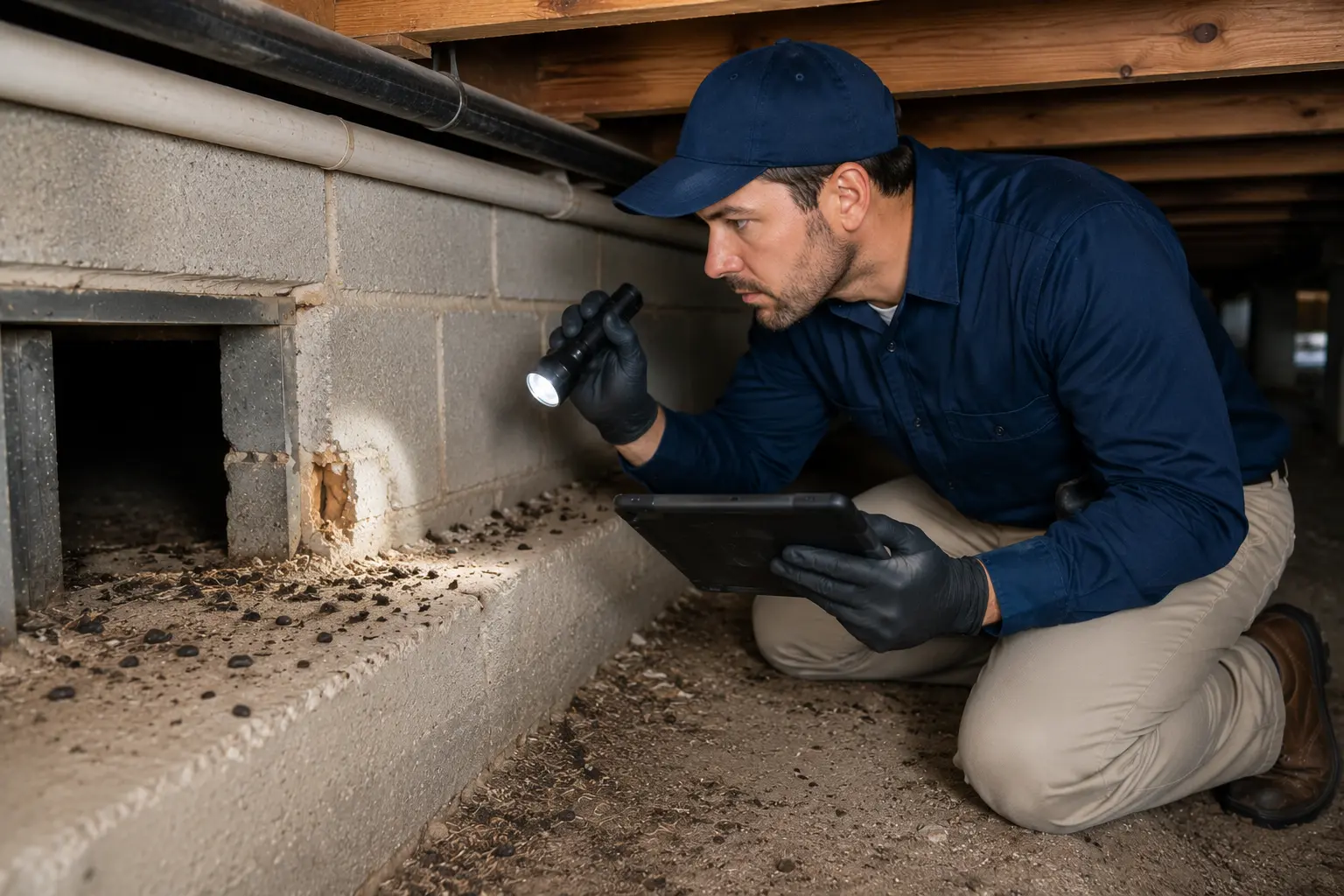
🔦 Crawl Space (Where Applicable)
On raised pier foundations — mainly waterfront/canal properties in FEMA flood zones — a dedicated assessment for burrows, vapor barriers, and plumbing.
At each zone, the goal isn’t just spotting droppings — it’s correctly attributing them to a species. Roof rat droppings are small and spindle-shaped with pointed ends; Norway rat droppings are larger with blunt ends; house mouse droppings are smaller still and typically clustered near food storage. Getting this identification right is what determines whether the treatment plan focuses on the roofline, the foundation, or the kitchen.
Tools and Methods Used in a Proper rodent control Inspection
A rushed inspection is a flashlight and a five-minute look. A proper one uses:
- Photo documentation at every entry point found, time-stamped and organized by zone
- A moisture meter at framing near suspected gnawed plumbing or in crawl space assessments
- Severity ratings (A/B/C) assigned to each entry point so the treatment plan prioritizes the most urgent access points first
- A borescope or flashlight inspection of enclosed voids like soffit intersections and utility chases
When to Schedule an Inspection in Boynton Beach — Beyond "I Heard Something"
Before Hurricane Season (March–May)
Storm-loosened soffits, fascia boards, and roof vents are the single most common new entry point created every year in South Florida. An inspection before June catches existing vulnerabilities before wind and rain turn them into active entry points.
After Hurricane Season, Before Reopening a Seasonal Home (October–November)
Snowbird-owned properties that sat closed over summer are exactly the properties where an undiscovered entry point had months to become an established colony.
Before Listing or Relisting a Short-Term Rental
A documented, dated inspection report is the evidence a host needs if a guest later files a complaint — considerably cheaper than a mid-season emergency response plus a refunded booking.
During a Home Purchase
Standard wood-destroying-organism (WDO) inspections at closing, using the National Pest Management Association’s NPMA-33 form, are designed primarily for termites — but the inspector is often the first to notice rodent activity and note it as a secondary comment. That note is not the same as a dedicated rodent inspection. If a WDO report mentions rodent activity, or a canal-adjacent property is being purchased, a separate rodent-specific inspection is worth the small additional cost before closing.
Any Time Droppings, Scratching, or an Unusual Odor Are Noticed
The National Pest Management Association identifies these as the standard indicators of rodent activity, and the sooner they’re confirmed and attributed to a species, the smaller the eventual treatment scope tends to be.
What Happens After the Inspection
A proper inspection ends with a written report, not a verbal recommendation. That report should include photo documentation of every entry point found, the severity rating assigned to each, the species identified, and a specific price for any recommended work — presented before any trapping or sealing begins. Reputable inspections typically credit the inspection fee toward any approved work.
What Does a Rodent Inspection Cost in Boynton Beach?
A standalone inspection with a written photo report typically runs $75–$150, and this fee is generally credited toward the cost of any approved trapping or exclusion work. There’s no reason a thorough inspection should cost meaningfully more than this — if a quote is significantly higher before any work has even been scoped, that’s worth questioning.
How to Tell a Thorough Inspection From a Rushed One
A thorough inspection takes 30–60 minutes minimum for an average single-family home, not 10. It produces a written report with photos, not a verbal “looks fine.” It results in a specific price for any recommended work rather than a vague range. And the technician can explain which species they believe is present and why, based on dropping shape, location, and travel pattern — not a generic “you have rodents” conclusion.
Frequently Asked Questions
Schedule Your Inspection — Same or Next Day
Photo-documented findings · Species identification · Severity-rated report · Transparent pricing
Rodent Shield Boynton Beach — Company Information
Rodent Shield Boynton Beach is a local, rodent-only team specializing in mouse and rat exclusion, attic cleanup, and crawl space decontamination across Boynton Beach and Palm Beach County.
📍 3050 SW 14th Pl, Boynton Beach, FL [33426]
📞 [+17282338899] · ✉️ [rodentcontrolboyntonbeach@rodentcontrolboyntonbeach.com]
⏰ Mondat to Saturday 8am-8pm
License: Florida FDACS Chapter 482, General Household Pest and Rodent Control
Serving Since: 2019
This page provides general information and does not replace an on-site professional inspection.